MousePlugins

GlassBreaker EQ

Air, weight, presence.

Measurement-fitted broad-stroke EQ with a selectable high-shelf air section. Five fixed bands, complementary filter bank, reports 0 samples of latency.

Formats CLAP VST3
€49.00 v1.1.0
Sign in to leave feedback

Stripe checkout. Cards, PayPal, wallets, and eligible Klarna instalments may be available.

Measurement-fitted broad-stroke EQ.

GlassBreaker EQ was designed from measured frequency-response data. We captured a defined calibration set across dozens of parameter states, extracted the frequency response at each one, and fitted a parallel filter bank to follow the same broad tonal shape.

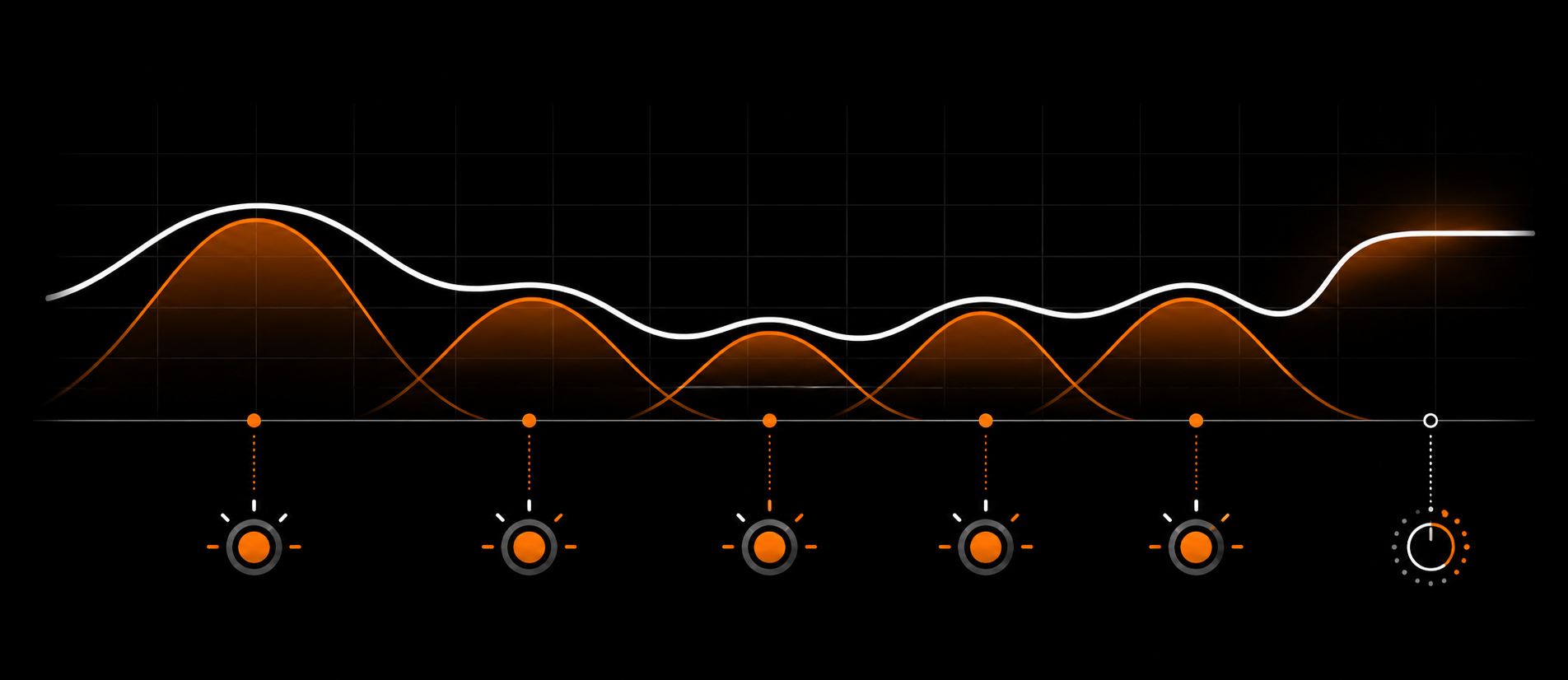
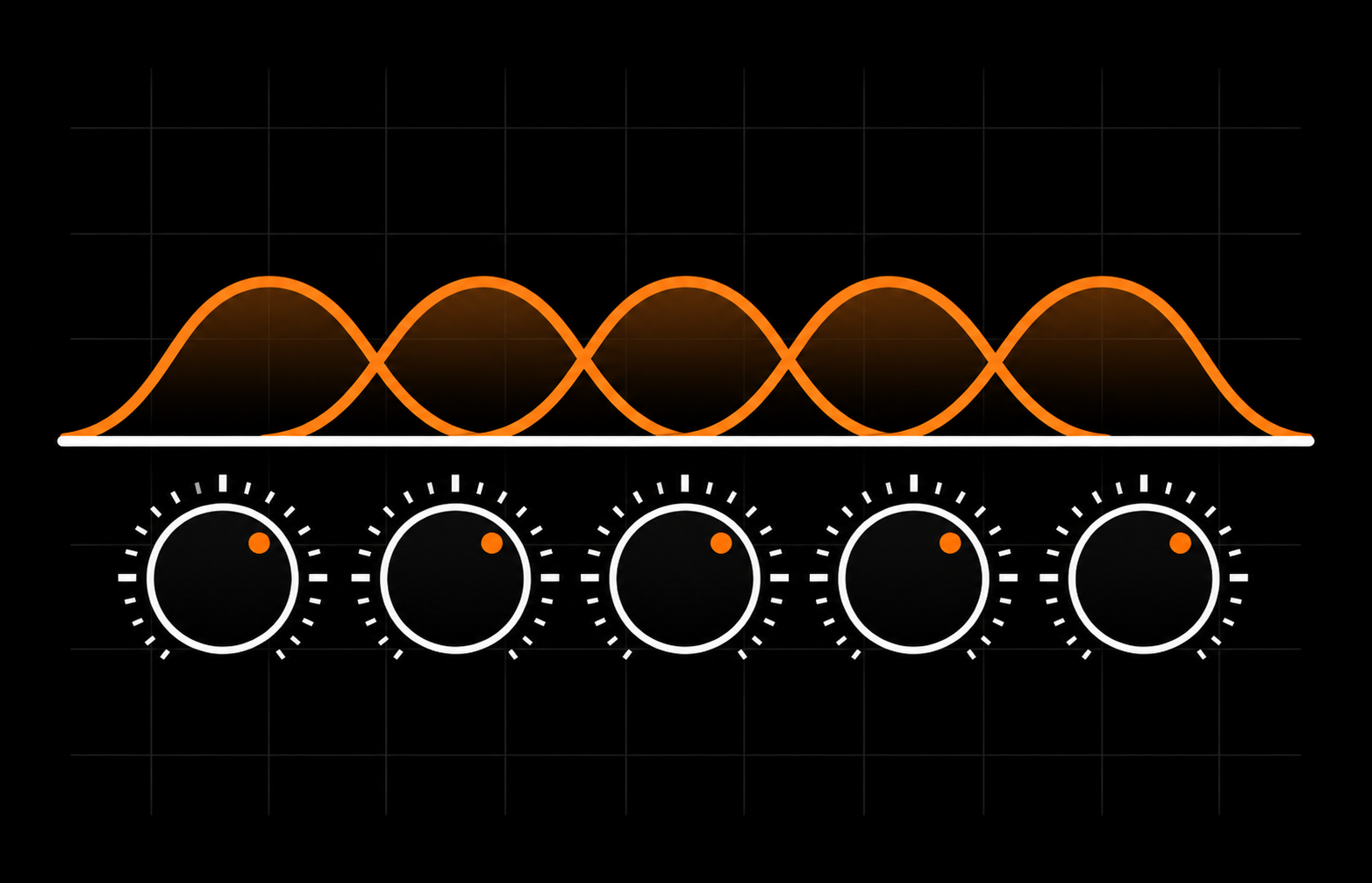
The result is five broad, overlapping, boost-leaning bands that interact as a complementary filter bank. Boost one band and its neighbours respond. Set all five to the same value and the overall response stays flat apart from level change: gain without intentional tonal shift. That constraint is built into the topology.

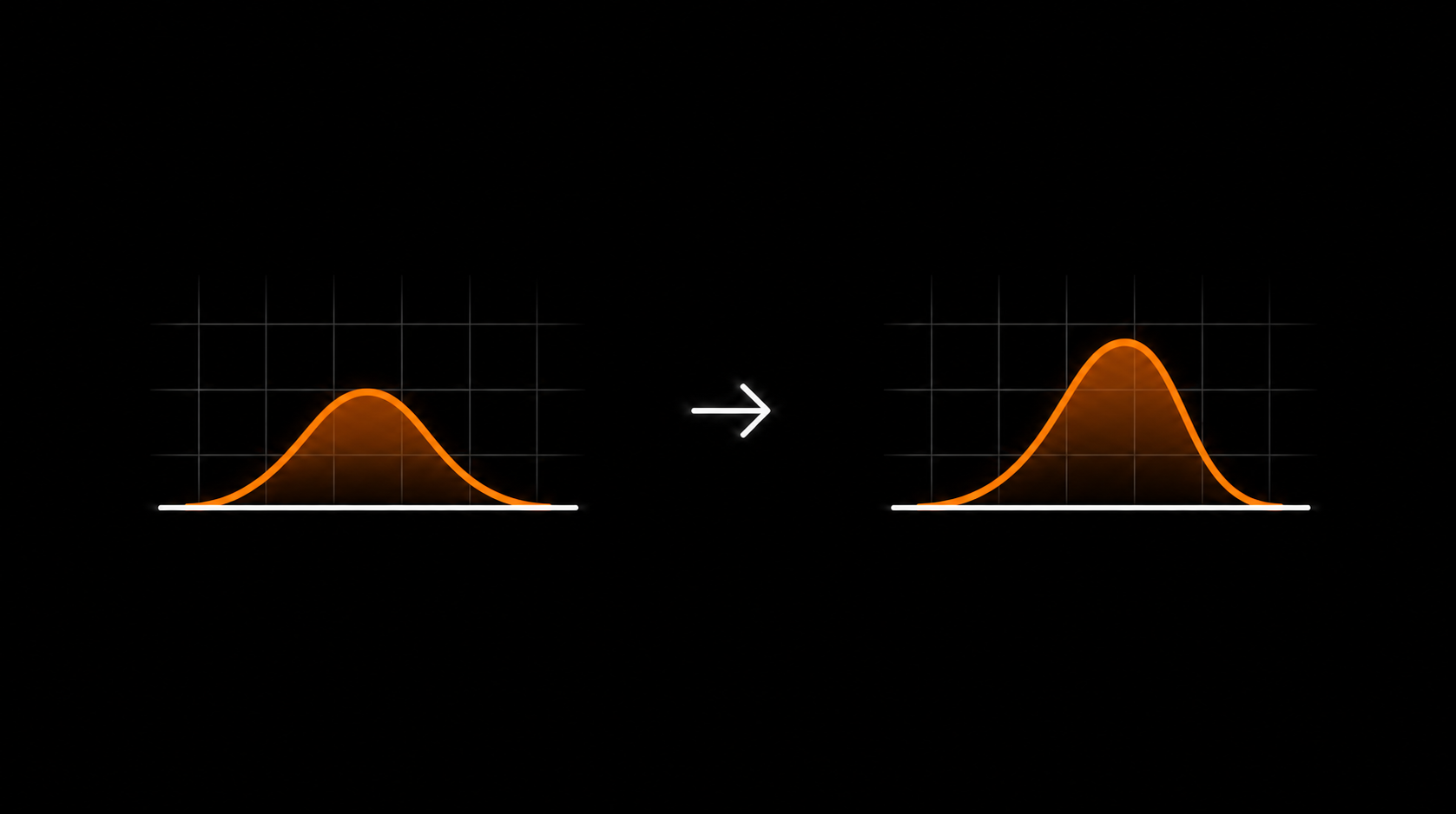
Each band boosts far more than it cuts: +15 to +19 dB at full boost, only −2 to −5 dB at full cut. That asymmetry comes from the measured calibration set: these are broad tone-shaping bands, not surgical notch filters.

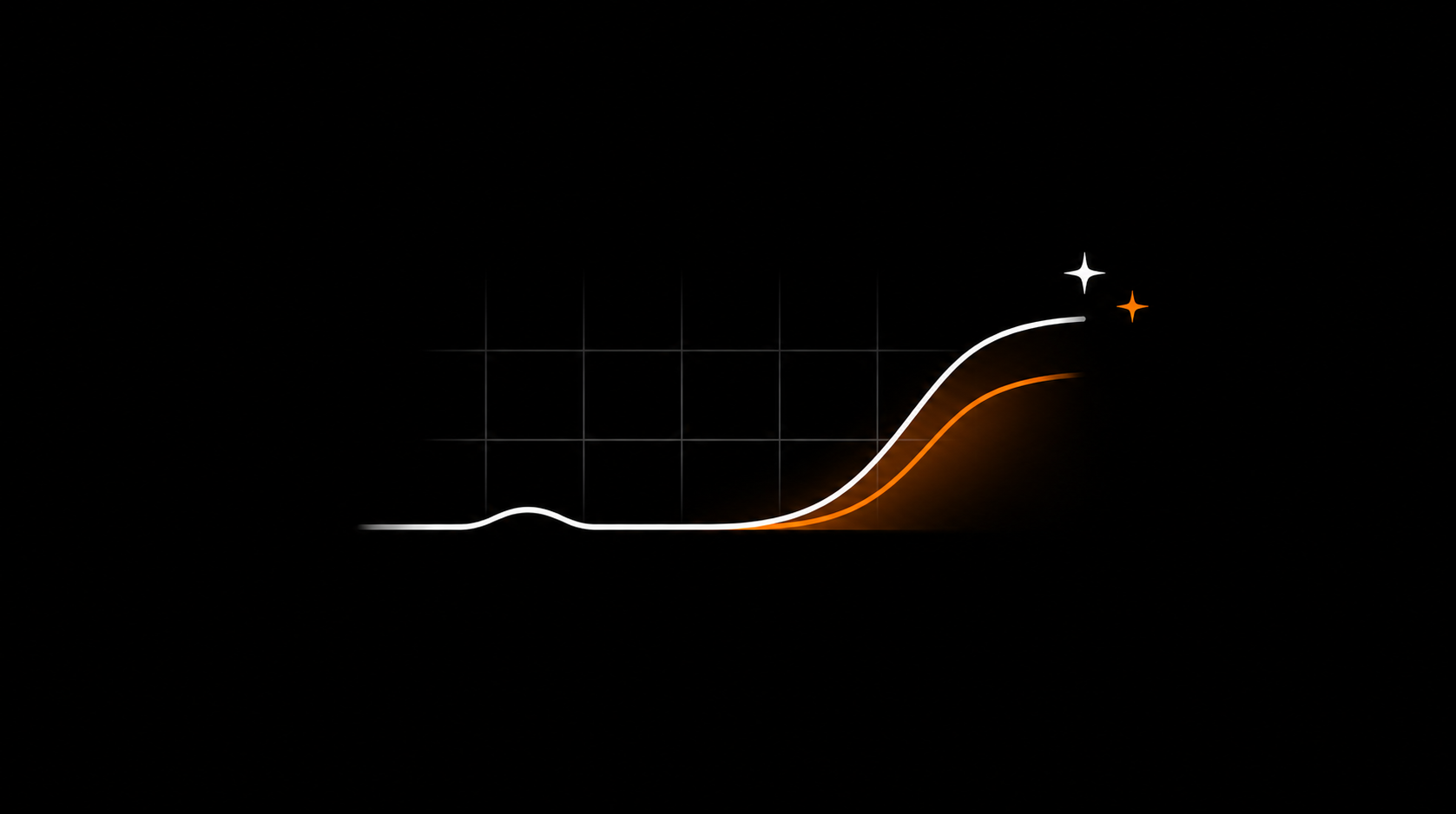
The Air section sits on top: a high-shelf boost at five selectable frequencies from 2.5 kHz to 40 kHz. At 10K it adds broad high-frequency "air" for vocals, acoustic instruments, and full mixes. At 2.5K it adds presence and forwardness. At 40K it reaches into ultra-high frequencies for sessions running at 88.2 kHz or higher.

Break mode is an alternative voicing engine with its own colour and tilt character, switchable inline. Same five knobs, different response: thicker, more aggressive, and less linear. One toggle, no menu dive.

GlassBreaker EQ reports 0 samples of latency. It uses sample-by-sample IIR processing, with no FFT, no convolution, and no lookahead. Calibration is within ≤0.75 dB across the measured calibration states.

GlassBreaker EQ is offline-first. No internet connection required for activation or use. The plugin sends no telemetry, performs no phone-home checks, and does not require an online account inside the DAW.

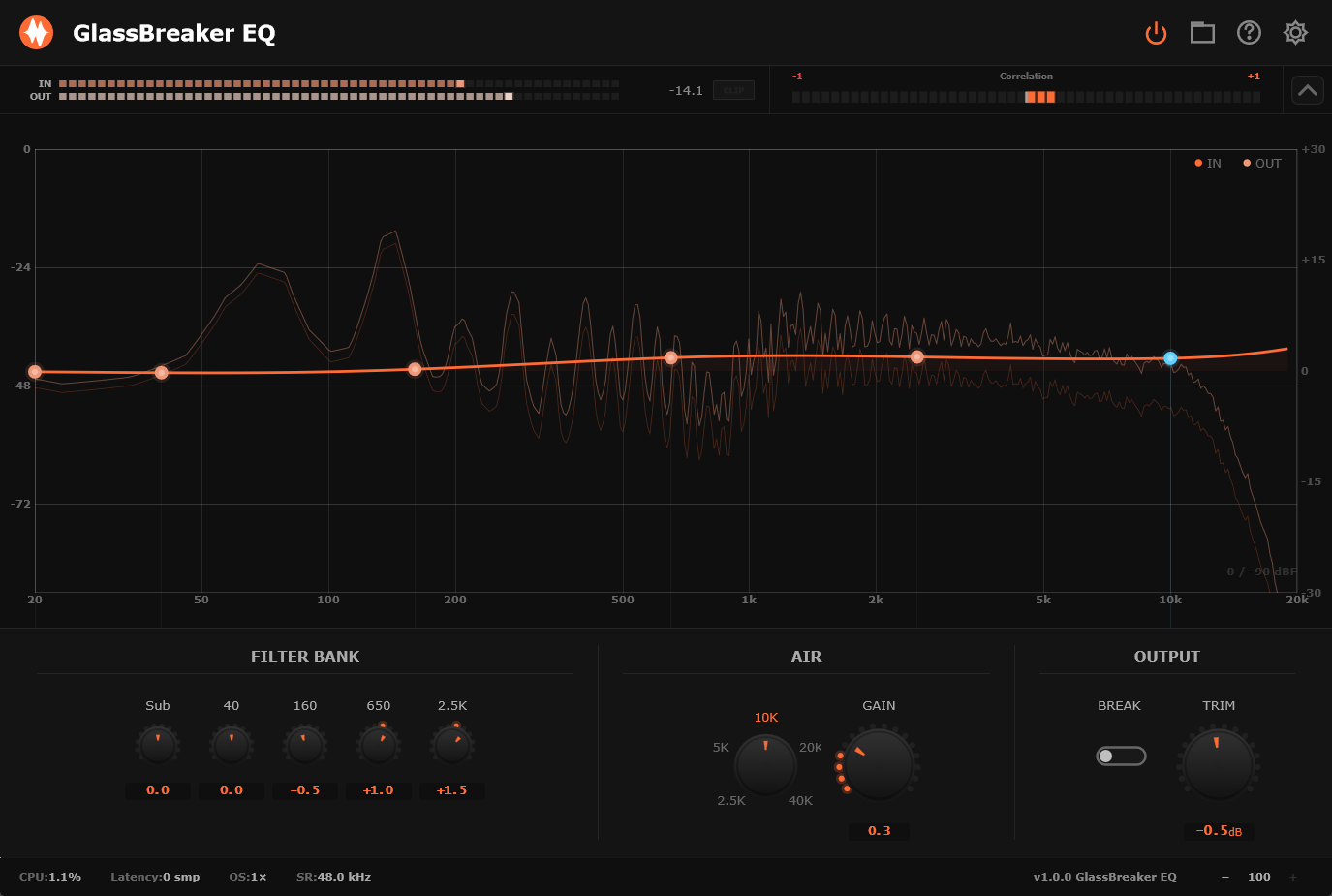
  • Air section: 2.5K / 5K
  • Air section: 10K
  • Air section: 20K / 40K
Lifetime bundles
Get GlassBreaker EQ in a lifetime bundle.

All current and future plugins in that bundle. Updates included for life. Prices rise as more plugins are added.

Learn more
Measurement-fitted broad-stroke EQ.

Measurement-fitted broad-stroke EQ with a selectable high-shelf air section. Five fixed bands, complementary filter bank, reports 0 samples of latency.

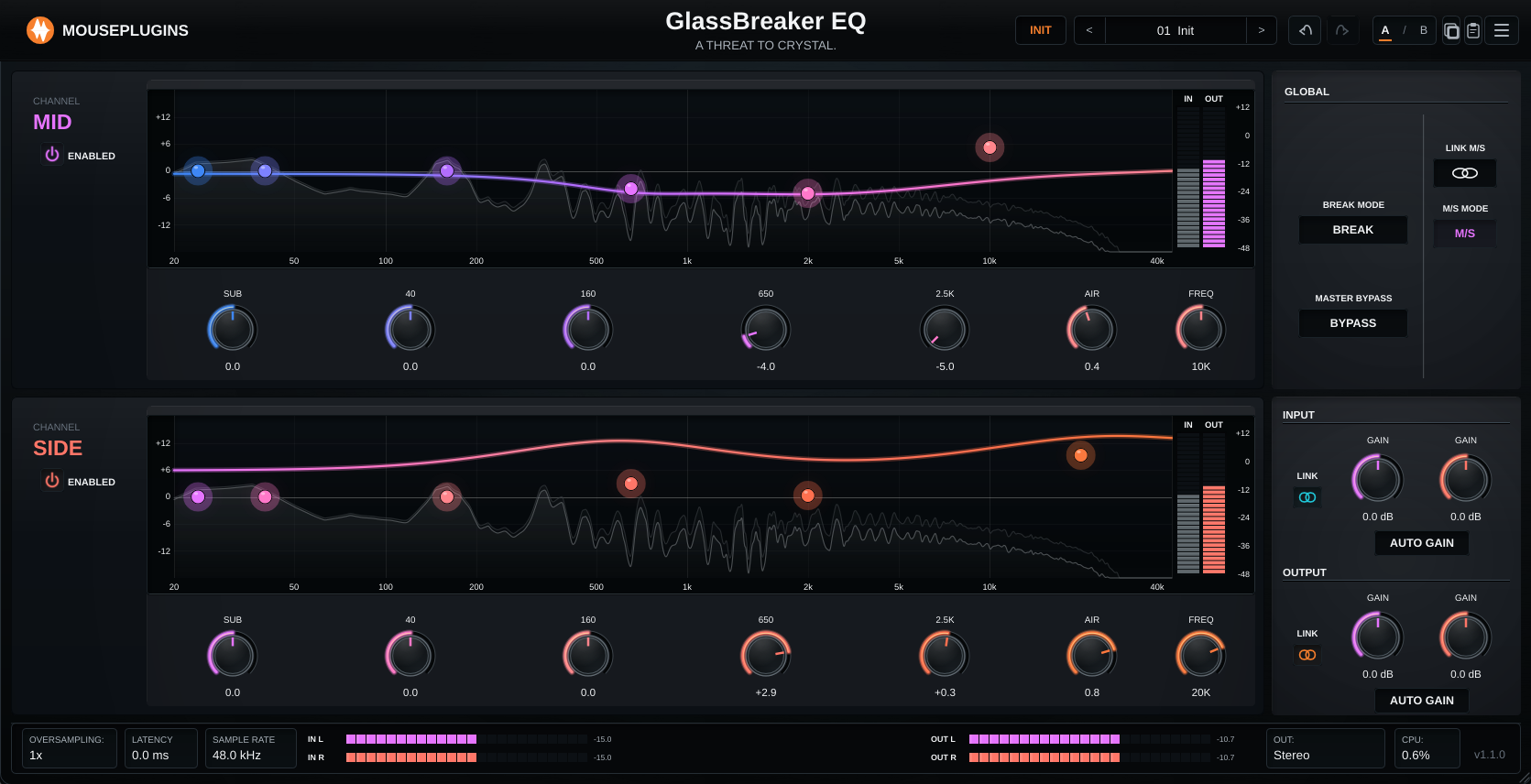
GlassBreaker EQ UI
Air section: 2.5K / 5K

Presence and clarity. 2.5K for dense mixes that need cut-through without brittleness. 5K for vocal presence and string brightness.

Air section: 10K

The default. Broad high-frequency "air" for opening up source material — the recommended starting point for most work.

Air section: 20K / 40K

Subtle top-end sparkle at 20K. Ultra-high at 40K — only meaningful at 88.2 kHz or higher sample rates.

01
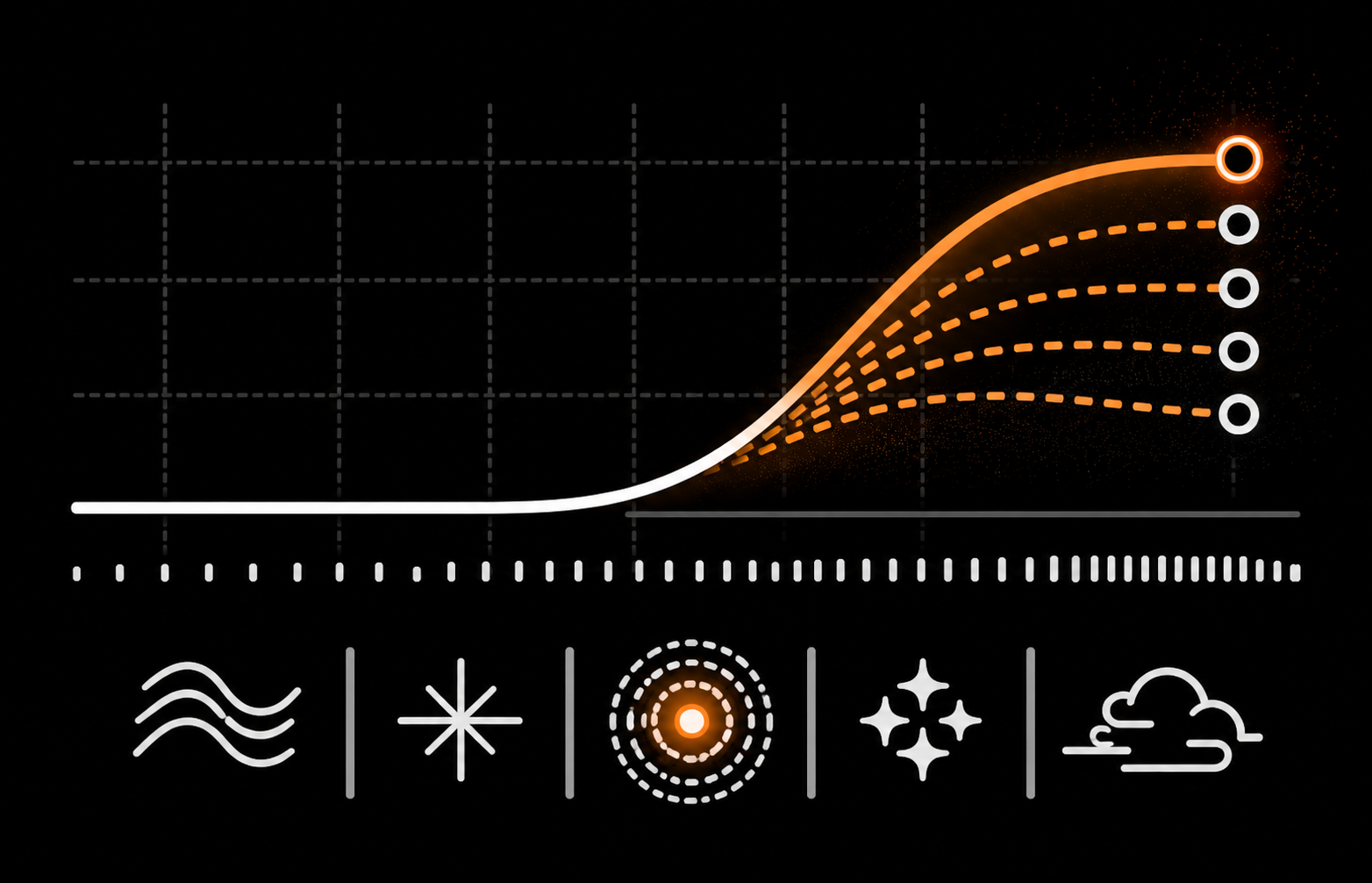
FIVE FIXED BANDS

Weight, body, and presence in one row

Sub, 40 Hz, 160 Hz, 650 Hz, and 2.5 kHz - five broad bands, one knob each. Lift, trim, and move on. No frequency hunting, no Q tweaking, no surgical work.

Weight, body, and presence in one row
02
THE AIR SECTION

Selectable shelf points up to 40 kHz

A separate high-shelf section with selectable points at 2.5, 5, 10, 20, and 40 kHz. Add presence, shine, or open top end without dragging in a second EQ.

Selectable shelf points up to 40 kHz
03
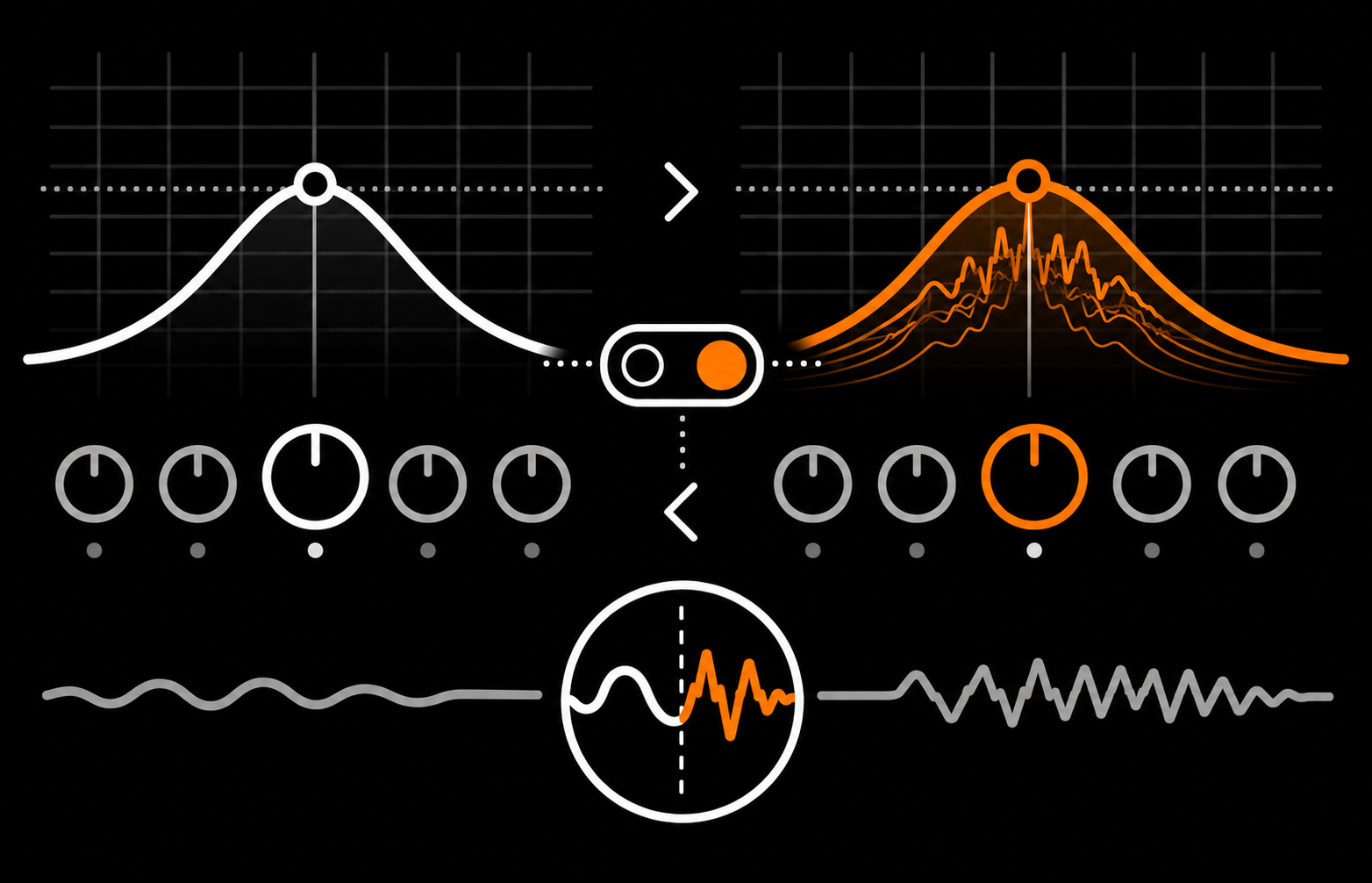
BREAK MODE

Alternative voicing engine

A toggle that swaps the band voicing for a denser, more coloured character. Same bands, same controls, stronger attitude. For the moments when clean EQ is not the answer.

Alternative voicing engine
04
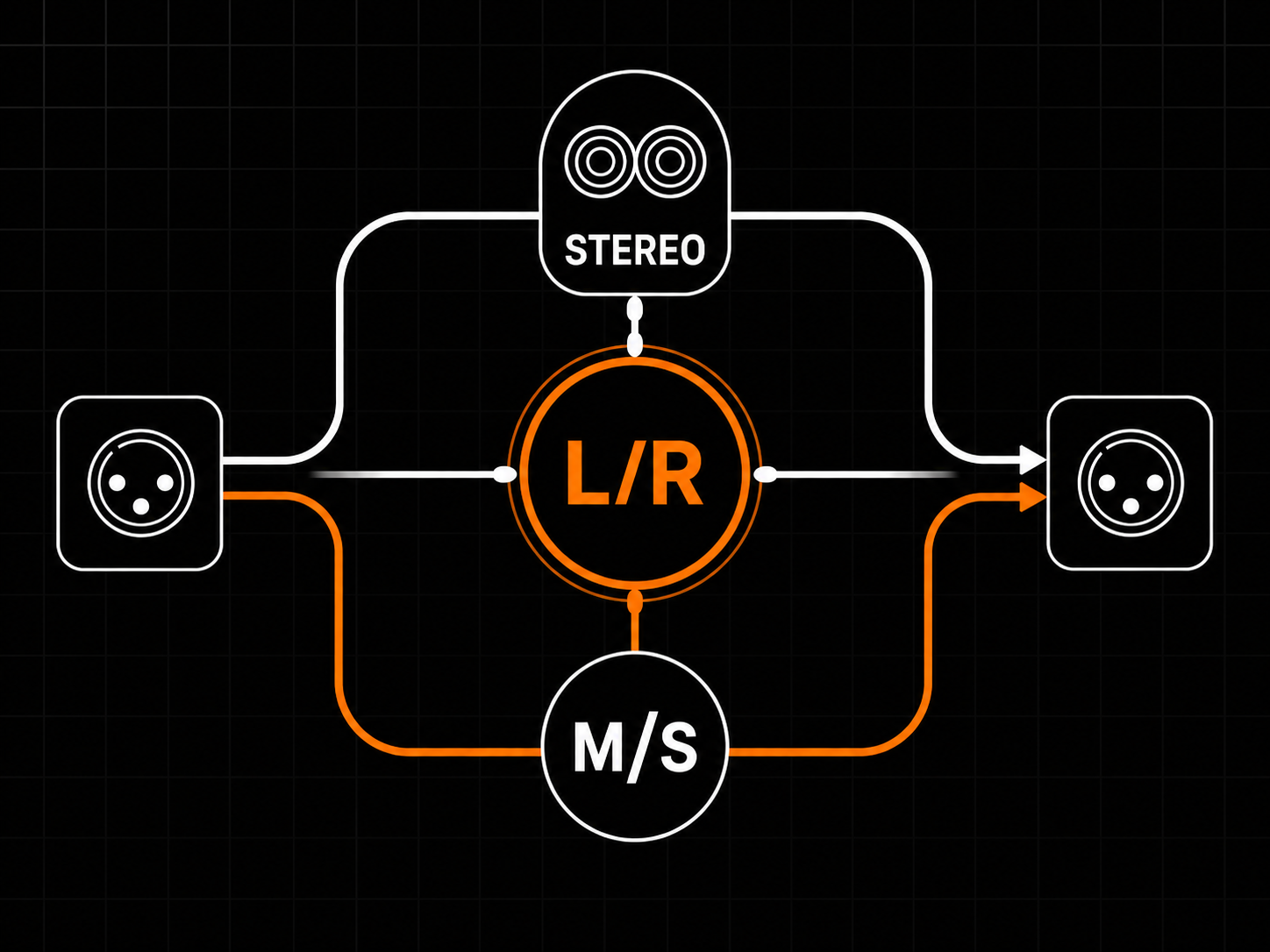
ROUTING IN ONE CLICK

Stereo, L/R, or M/S

Switch between Stereo, Left/Right, and Mid/Side operation from one control. Internal Mid/Side encode/decode and Lane Link let you move quickly between classic stereo polish, independent dual-lane work, and width-aware tone shaping.

Stereo, L/R, or M/S
Overview
Plugin type Measurement-fitted broad-stroke EQ
Use cases Vocal / acoustic instrument air, mix-bus polish, broadband tone shaping, lo-fi colour
Channel modes Stereo, Left/Right, Mid/Side
Lane linking Linked or unlinked processing per mode
Reported latency 0 samples
Processing
Topology Parallel summing of five fixed-frequency bands + selectable air shelf
Filter bank Complementary: flat response when all bands are equal
Response Asymmetric by design — bands boost more than they cut
Break mode Alternative voicing engine with denser, less linear character
Air section Selectable high-shelf boost up to 40 kHz
Oversampling 1x, 2x, 4x, 8x
Quality modes Live 1x / Design 2x / Mix 4x / Master 8x
Internal processing High-precision internal DSP
Controls
Sub -5 to +5, low band
40 Hz -5 to +5, low band
160 Hz -5 to +5, low-mid band
650 Hz -5 to +5, mid band
2.5 kHz -5 to +5, upper-mid band
Air section frequency 2.5 / 5 / 10 / 20 / 40 kHz
Air Gain 0-10 high-shelf air amount
Break Toggle — alternative voicing engine
Trim Output gain trim
Channel Mode Stereo / Left-Right / Mid-Side
Lane Link Linked / Unlinked
Input / Output Gain staging with optional Auto Gain
Auto Gain Input and output gain staging helpers calibrated around 0 VU / -18 dBFS RMS
Knob reset Double-click any knob
Metering
Input meters Per active lane, peak + RMS
Output meters Per active lane, peak + RMS
Footer readout Latency, sample rate, CPU, version
Formats
Plugin formats VST3, CLAP
Sample rates 44.1, 48, 88.2, 96, 176.4, 192 kHz
Channel layout Stereo in / stereo out
Automation All main controls exposed to host automation
Preset format Single-file .glassbreakerpreset XML
System Compatibility
Windows 10 / 11 (64-bit)
Linux x64 glibc 2.35+
Tested / recommended Ubuntu 22.04+, Debian 12+, Mint 21+, Fedora 36+, Pop!_OS 22.04+
Rolling distros Arch / Manjaro / EndeavourOS / Garuda, openSUSE Tumbleweed
macOS Not currently shipped
CPU x86_64 with SSE2
RAM Negligible (DSP-only)
Internet Not required for activation
Licensing
License model Offline, machine-based
Activation Local license file
Machines Unlimited (personal use)
Resale Not transferable
Ownership Perpetual license, free updates included
Installation
Windows VST3 C:\Program Files\Common Files\VST3\
Windows CLAP C:\Program Files\Common Files\CLAP\
Linux VST3 ~/.vst3/ or /usr/local/lib/vst3/
Linux CLAP ~/.clap/ or /usr/local/lib/clap/
Components VST3 + CLAP for Windows and Linux
Authorization Local license file, no internet check
We captured a defined calibration set at dozens of parameter states, extracted the frequency response at each one, and fitted our parallel IIR filter bank to follow that shape. The fit stays within 0.75 dB of the measured calibration set across all states.
That asymmetry comes from the measured calibration set. Each band boosts +15 to +19 dB at full, but only cuts -2 to -5 dB. These are broad tone-shaping bands, not surgical notch filters.
A selectable high-shelf boost at 2.5K, 5K, 10K, 20K, and 40K. It adds presence, shimmer, and "air" using broad high-frequency lift rather than narrow corrective EQ. Start at 10K with Gain at 3-4 for most material.
Break mode is an alternative voicing engine with its own colour and tilt character. Same five knobs, different response: thicker, more aggressive, and less linear. Toggle it inline, no menu dive.
The frequency response stays flat apart from level change: gain without intentional tonal shift. This is a defining property of the complementary filter bank topology.
GlassBreaker EQ reports 0 samples of latency. It uses sample-by-sample IIR processing, with no FFT, no convolution, and no lookahead.
It works, but the frequency is clamped to 90% of Nyquist, around 21.6 kHz at 48 kHz. For the full 40K shelf behaviour, run your session at 88.2 kHz or higher.
The demo is fully functional: every control is active and there is no time limit. A 0.5-second noise burst plays every 60 seconds and will be printed in renders. No account is required to download it.
The name points to the plugin's focus on high-frequency presence and forceful broad-band tone shaping. Glass suggests clarity; Breaker is the more aggressive side of the EQ when you push the air section or engage Break mode.
What's Included
GlassBreaker EQ box
  • GlassBreaker EQ Plugin
  • Quick Start
  • Full User Manual
  • Factory presets
Supported Formats
CLAPVST3
System Requirements
Windows: 10 or later
Linux x64: glibc 2.35+
  • Ubuntu 22.04+
  • Debian 12+
  • Linux Mint 21+
  • Fedora 36+
  • Arch / Manjaro / EndeavourOS / Garuda
  • openSUSE Tumbleweed
  • Pop!_OS 22.04+
CPU: x86_64 with SSE2
Host: 64-bit VST3 or CLAP-compatible DAW
Free updates Included for GlassBreaker EQ 1.x
Secure payments Stripe, PayPal, wallets, Klarna when eligible
Human support Real replies when something breaks
Cart
Cart empty
Browse Plugins