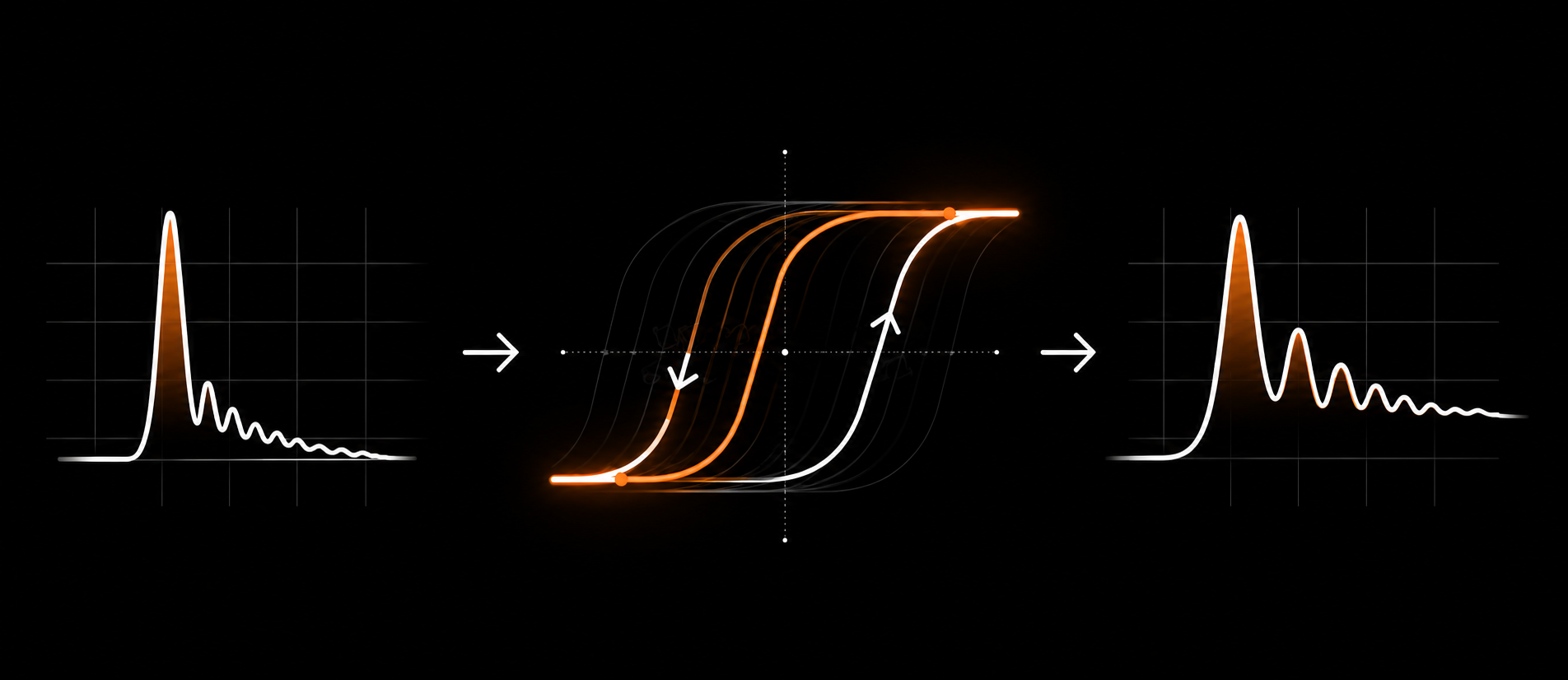
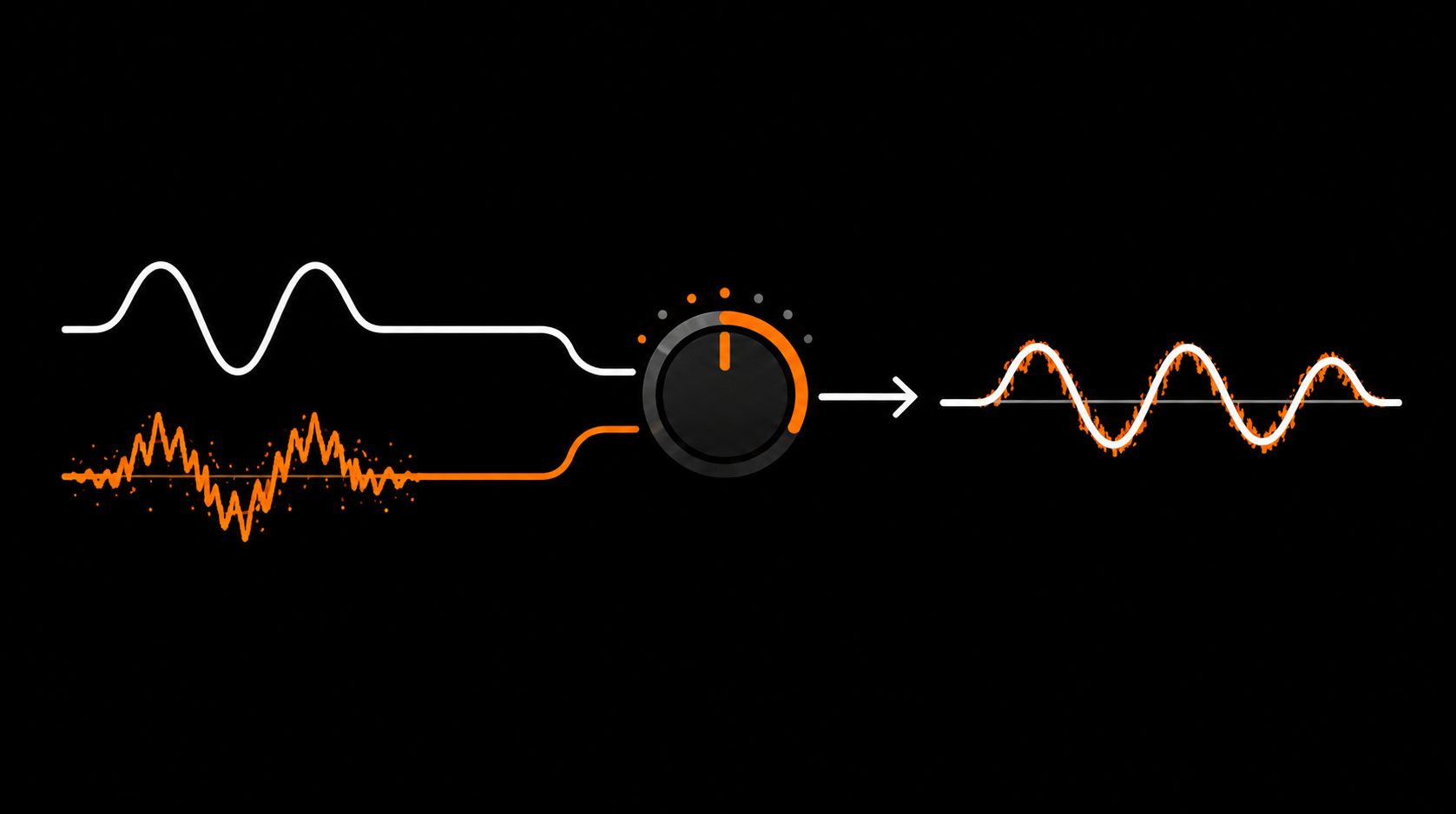
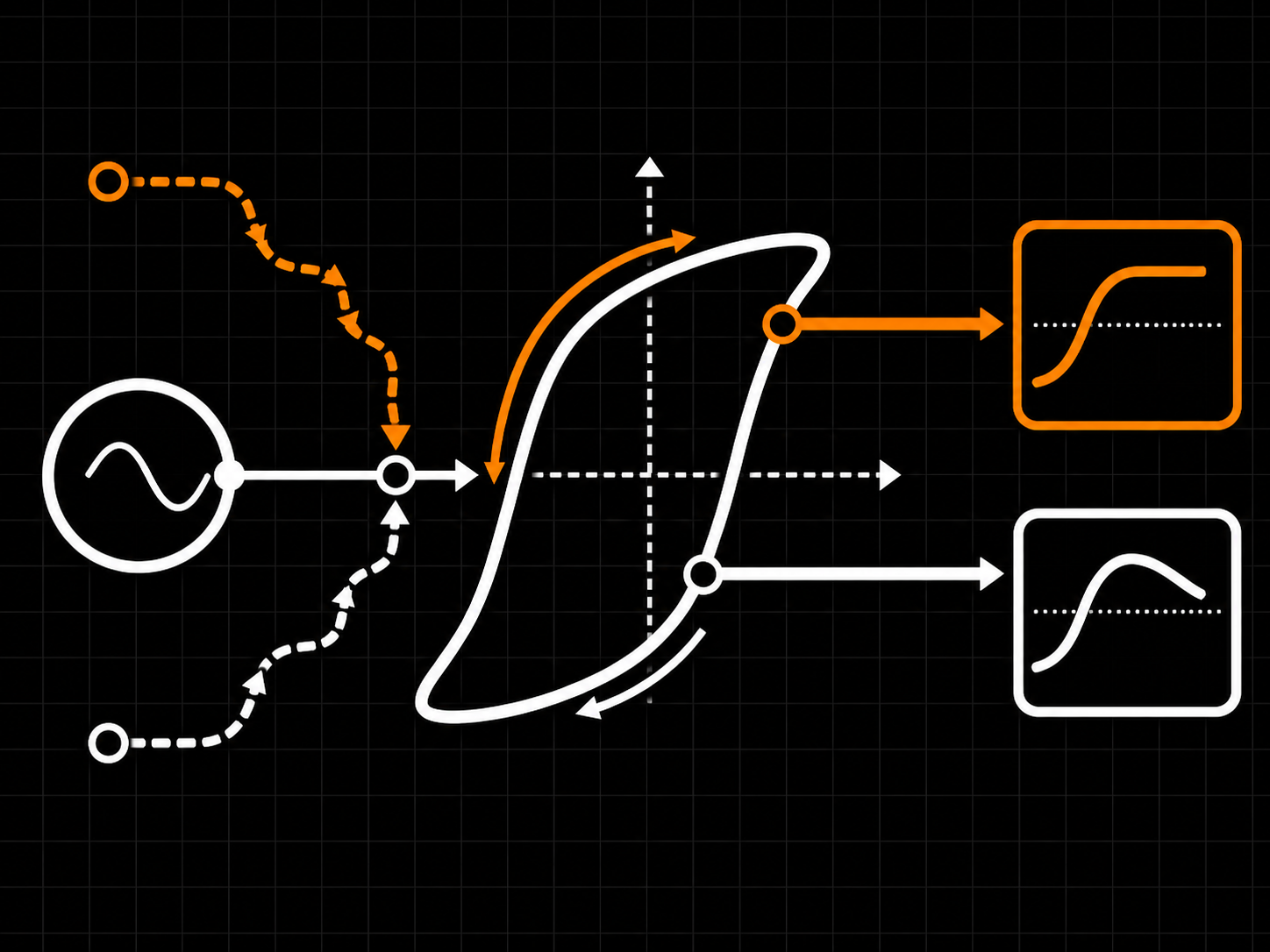
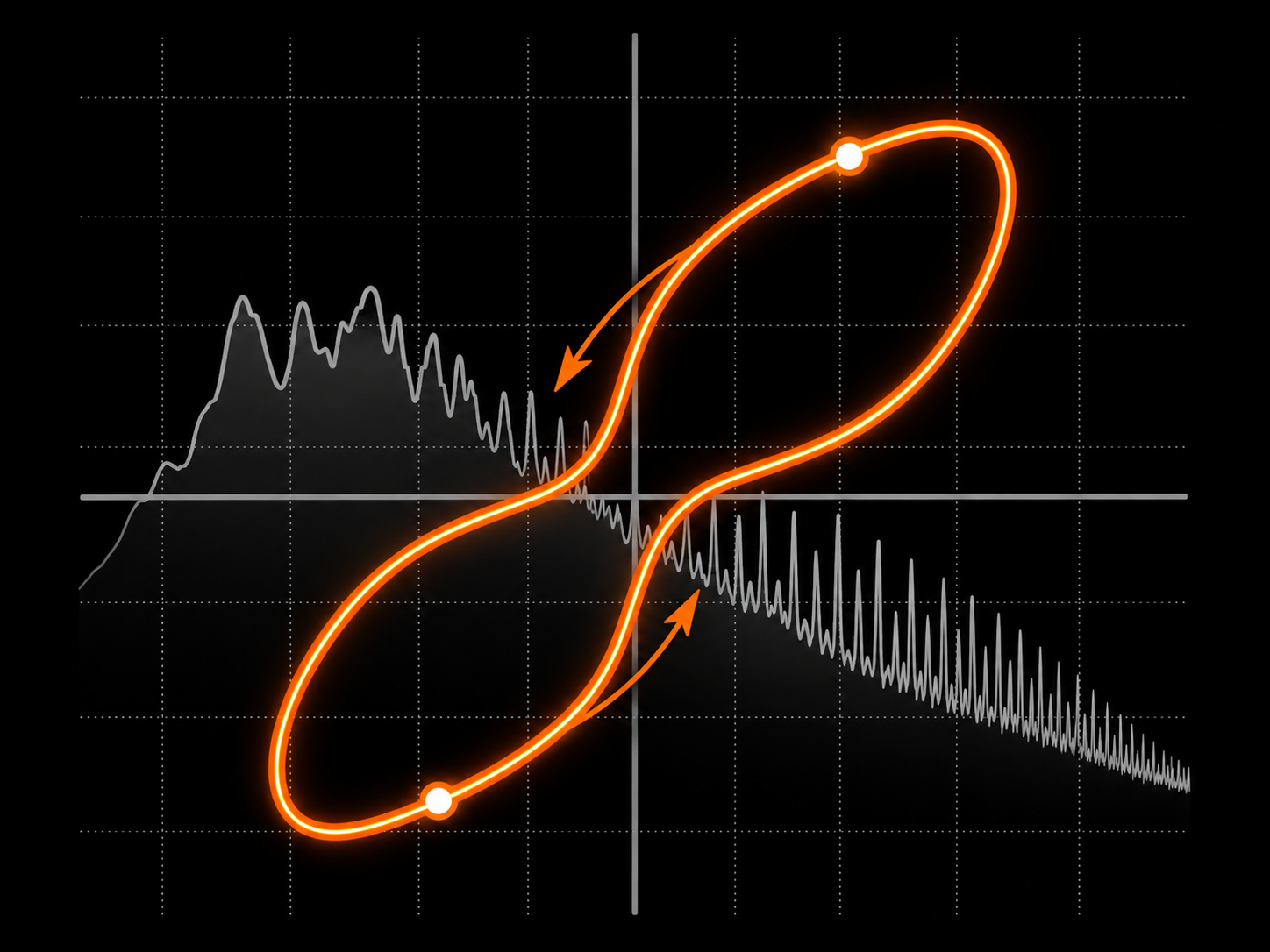
Many saturation designs apply a transfer curve: a static function that maps input to output the same way every time. Hysteresis Shaper uses a stateful magnetic model inspired by classical magnetic hysteresis behaviour. The output depends on the current input and on where the magnetisation state was a moment ago.
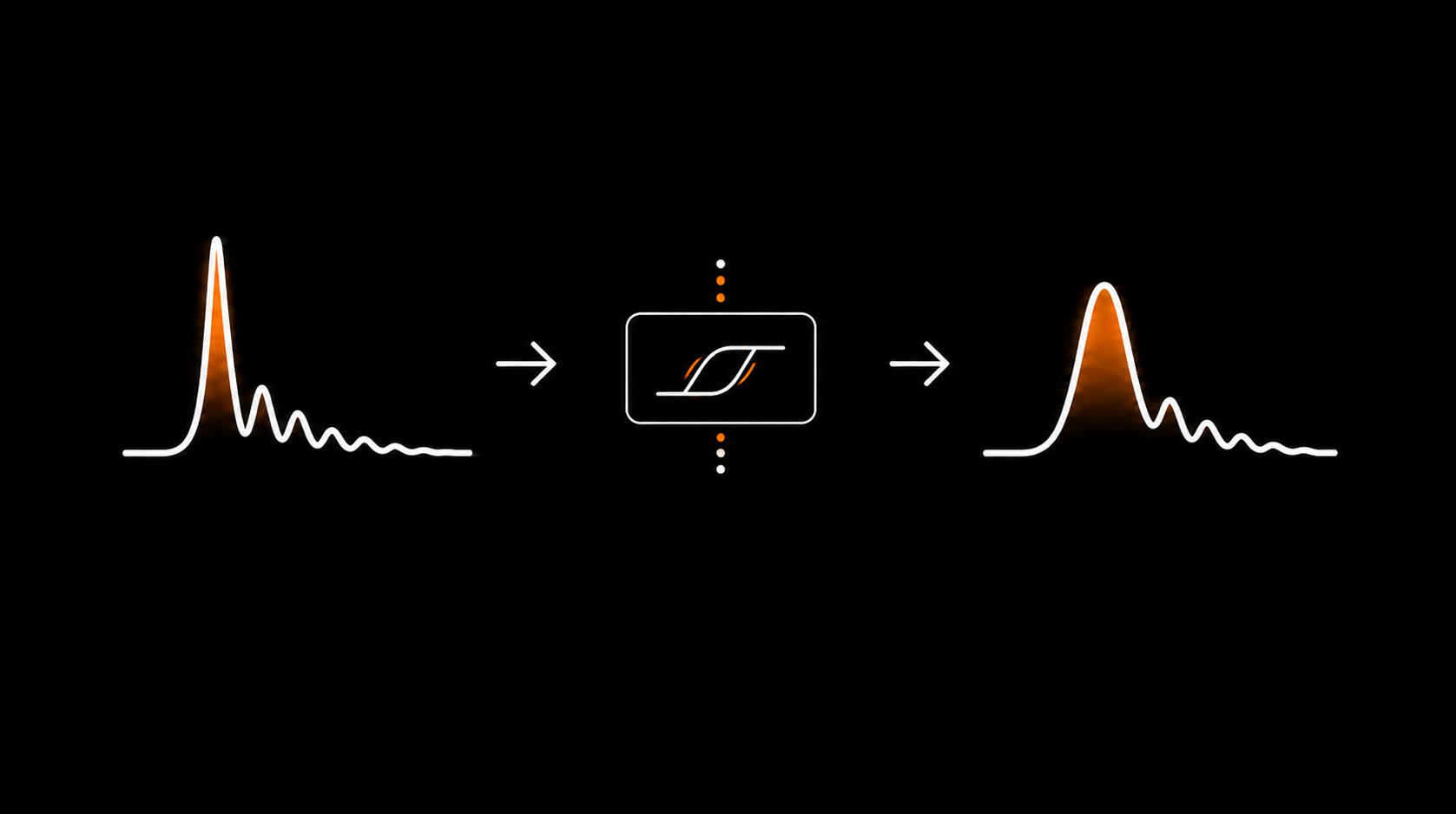
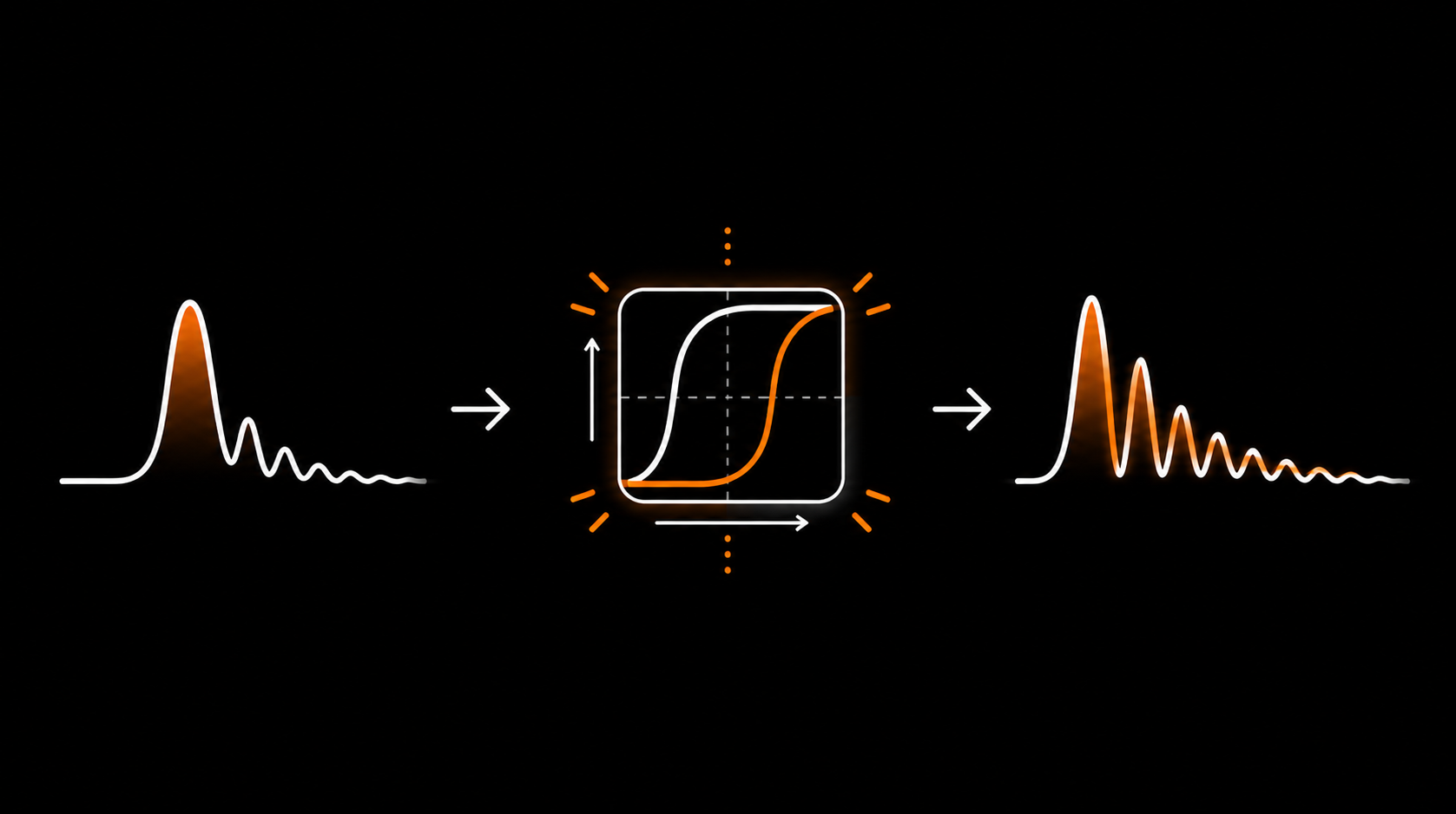
That history-dependence is what makes magnetic saturation behave differently from tube-style saturation or digital clipping. When you drive into it gently, transients soften and subtle cohesion builds. Push harder and the hysteresis loop opens wider: harmonics build, the ceiling compresses, and the saturation character changes depending on what happened in the previous samples.
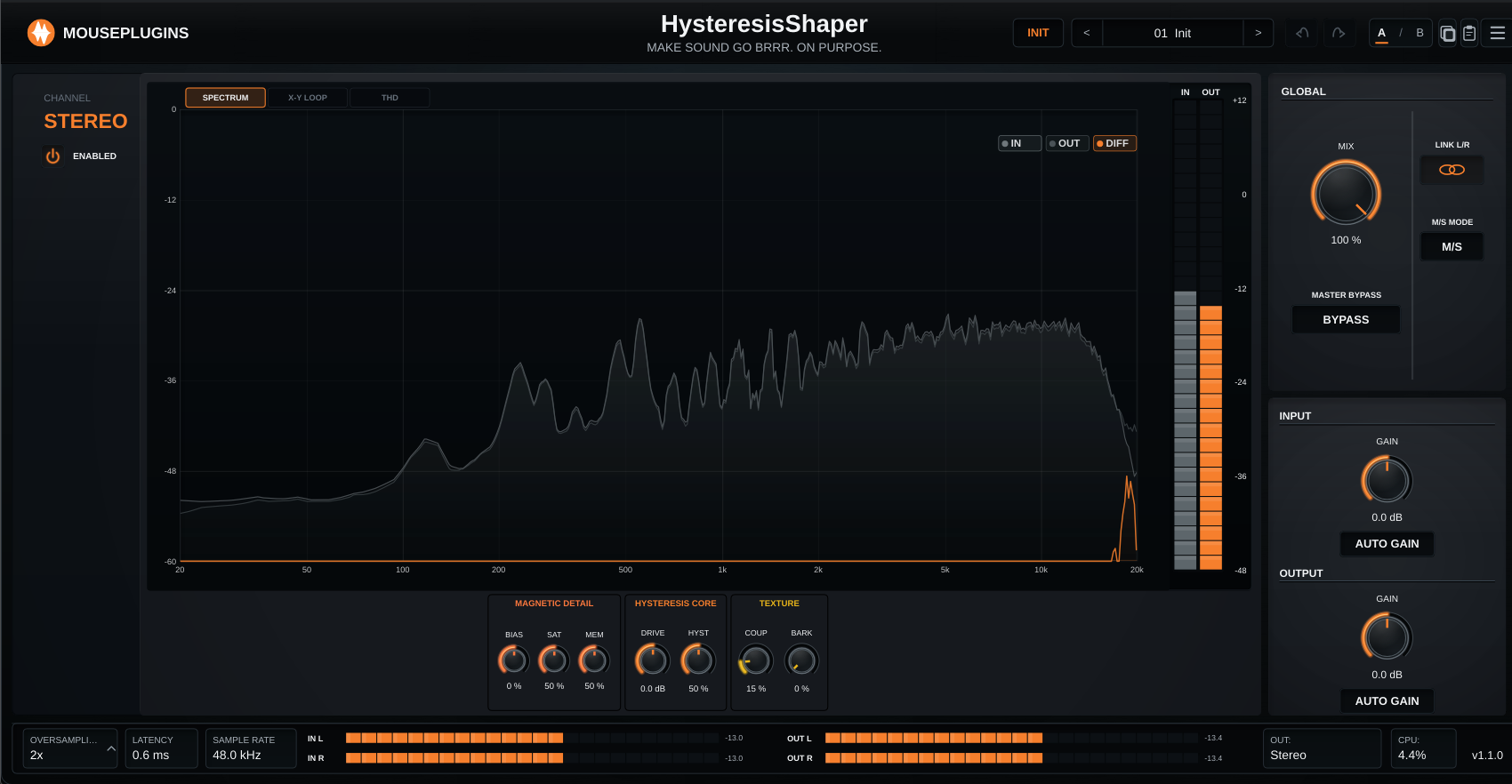
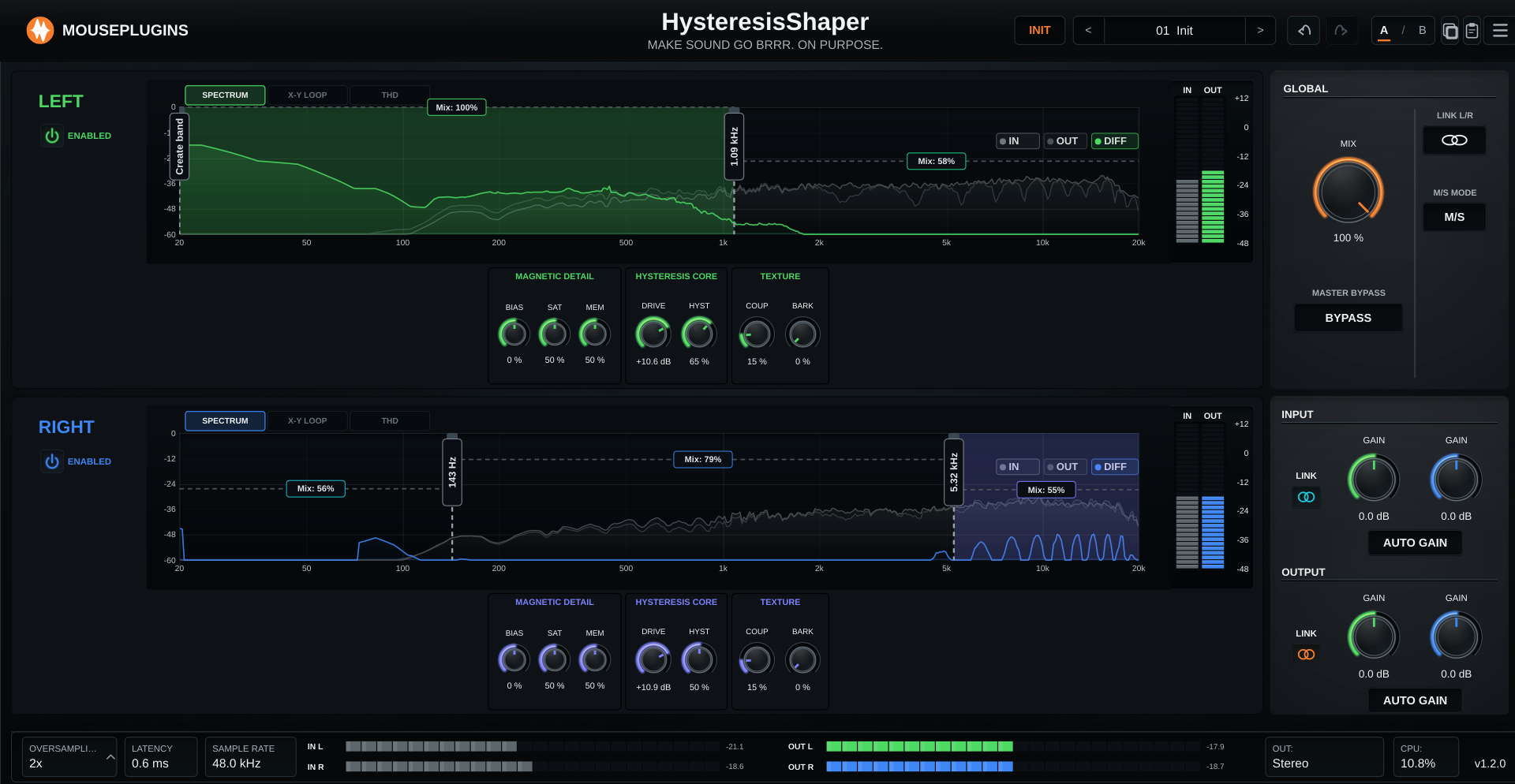
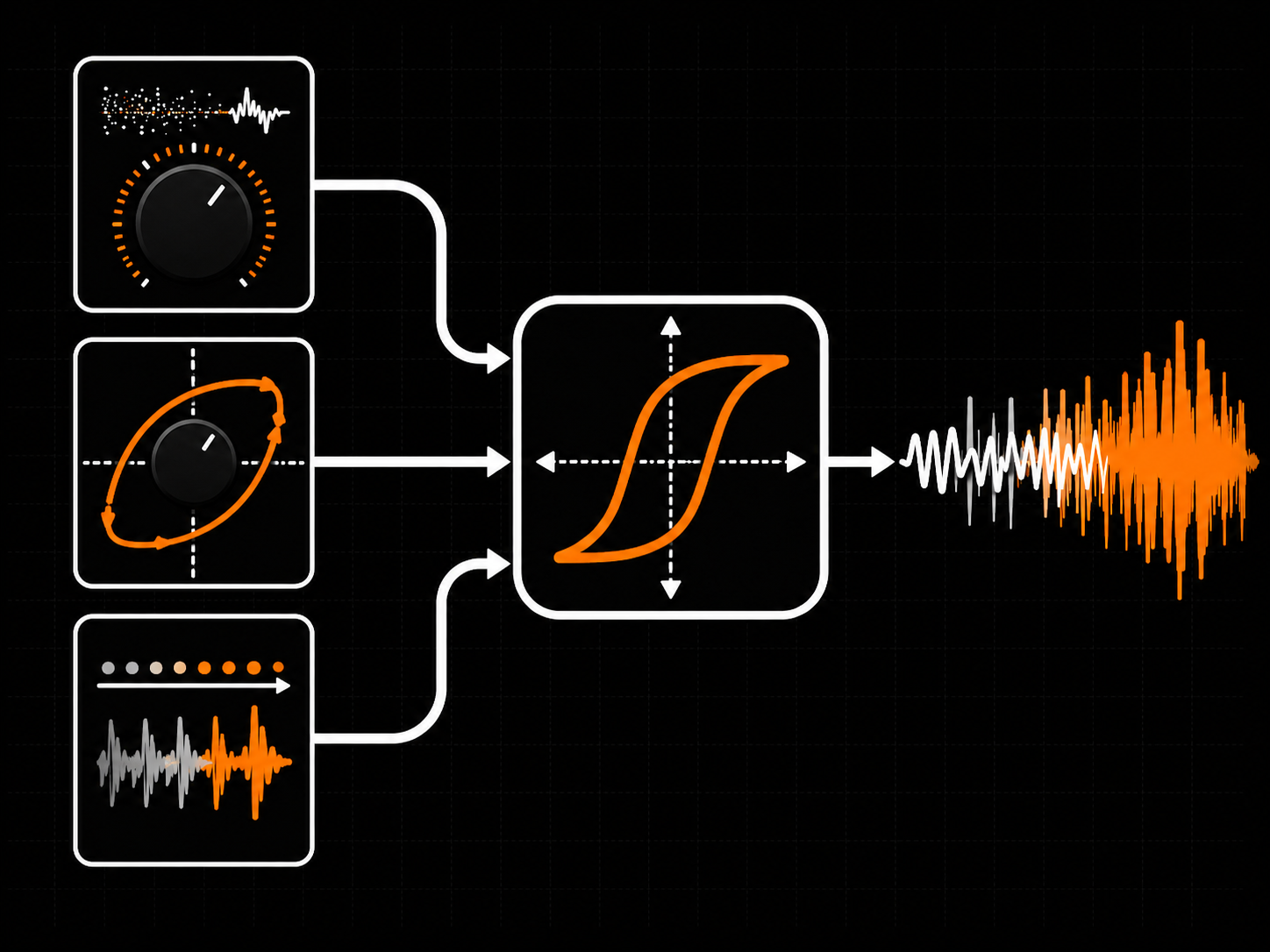
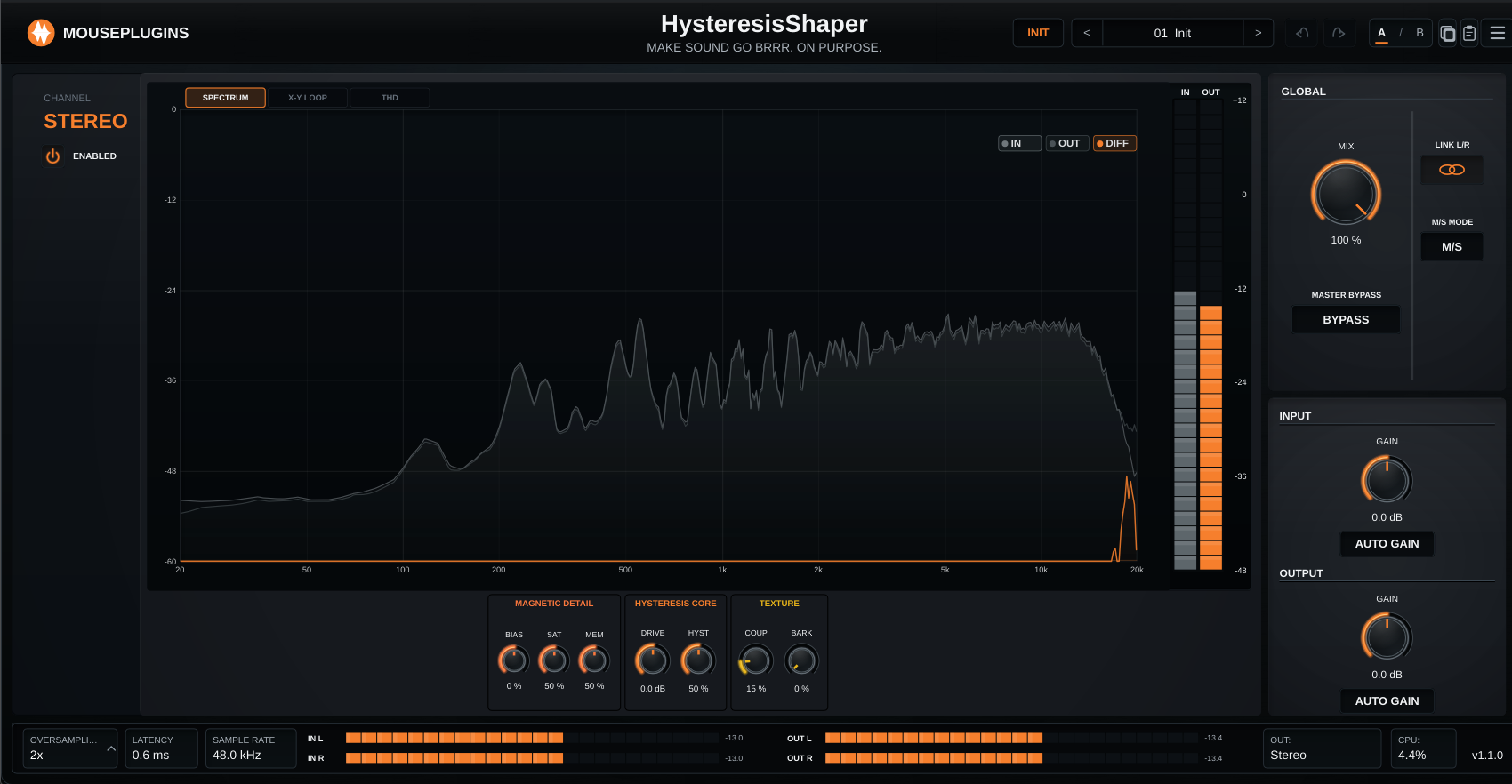
Five core controls shape the magnetic behaviour. Drive sets the input level into the model. Hysteresis controls the width of the loop — wider means more harmonics and more history-dependence. Saturation sets the magnetic ceiling. Memory controls how much influence the previous state has on the current output. Bias shifts the DC offset for asymmetric harmonic character.
Two advanced controls add texture. Coupling introduces inter-sample interaction: a subtle complexity based on neighbouring magnetic-state interaction inside the model. Barkhausen adds controlled stochastic grain inspired by Barkhausen-style magnetic domain jumps.
Four quality modes: Live (1×, 0 samples reported latency, RK2 integrator), Design (2×, RK2), Mix (4×, RK4), and Master (8×, RK4). Higher modes push aliasing further above the audible band, while Mix and Master use the higher-order RK4 integrator. Live is for tracking, Master is for final renders.
Hysteresis Shaper is offline-first. No internet connection required for activation or use. The plugin sends no telemetry, performs no phone-home checks, and does not require an online account inside the DAW.