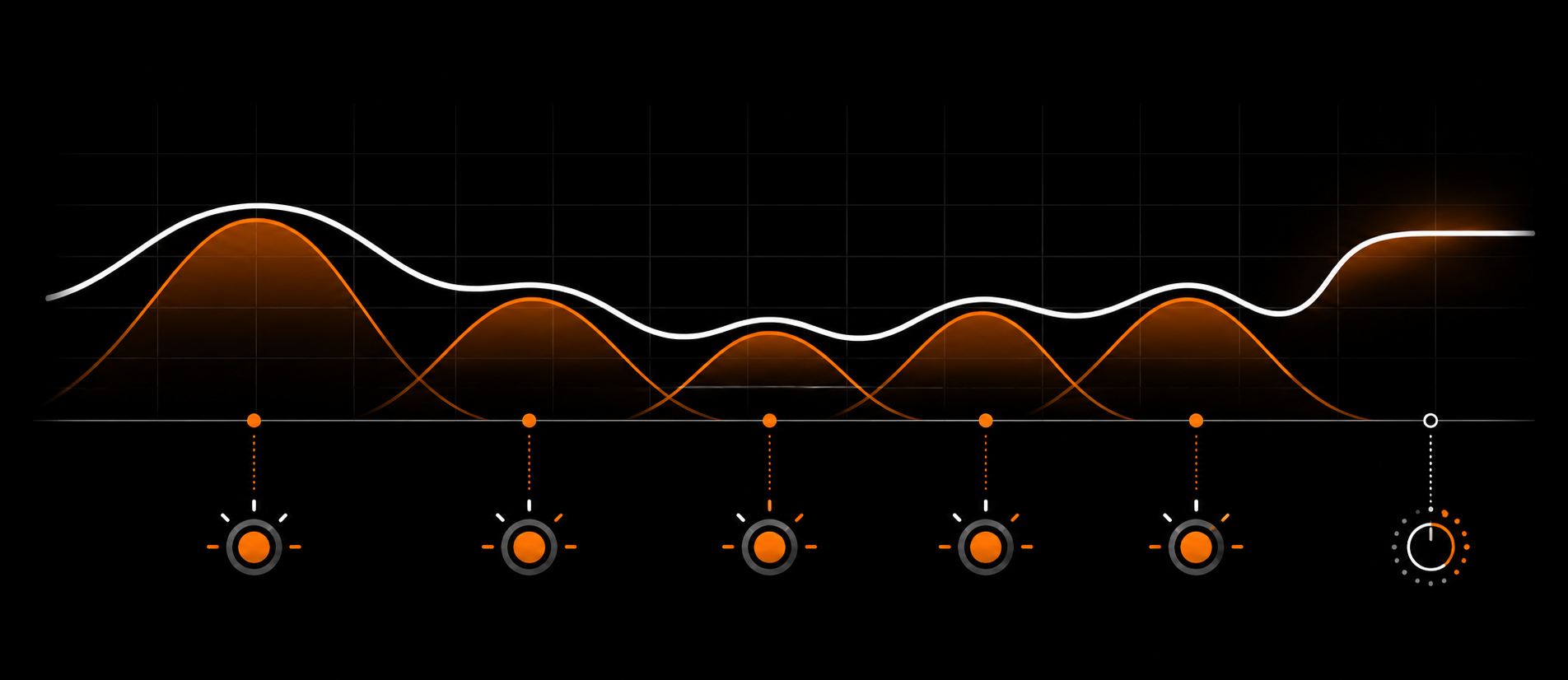
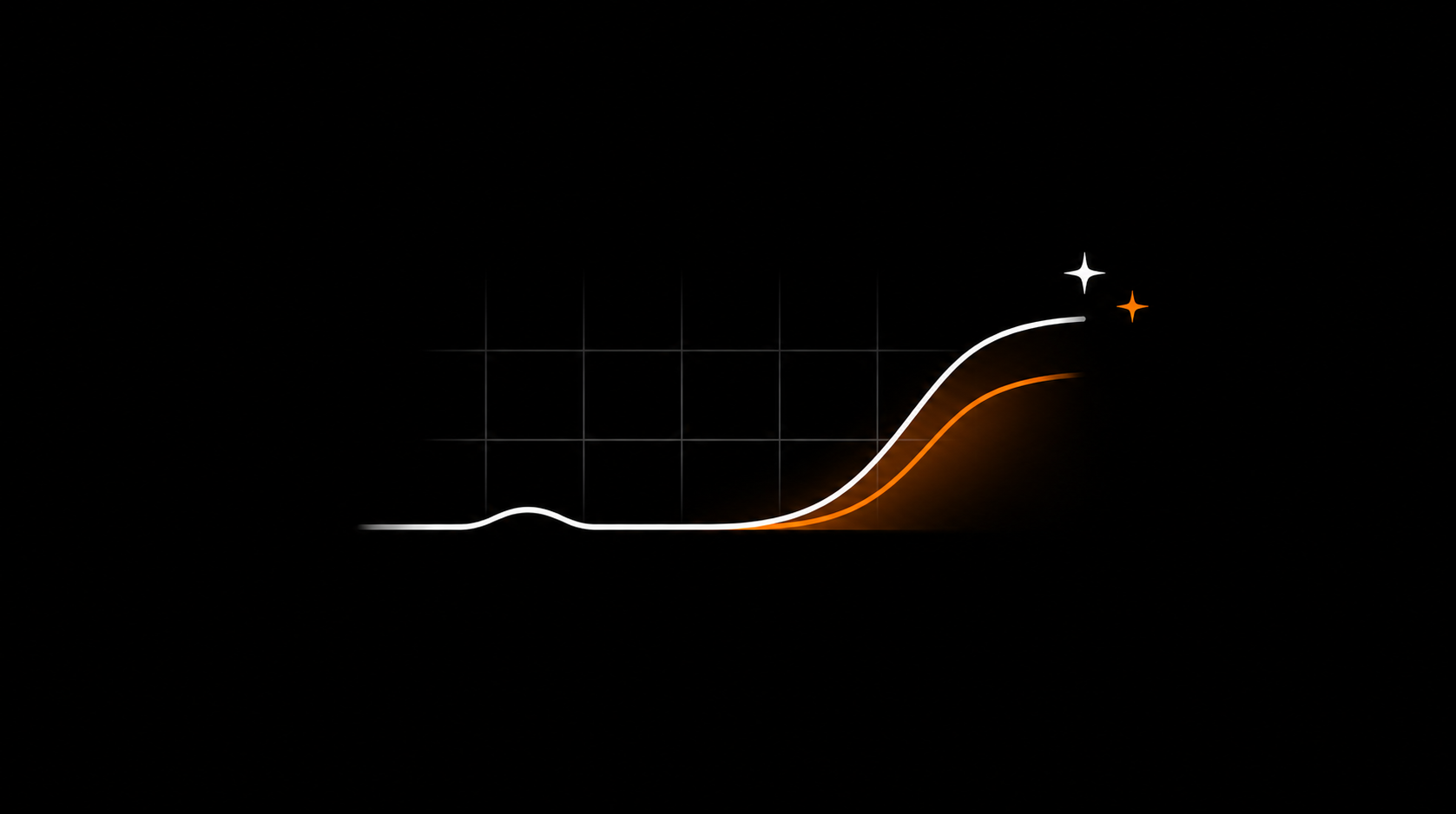
GlassBreaker EQ was designed from measured frequency-response data. We captured a defined calibration set across dozens of parameter states, extracted the frequency response at each one, and fitted a parallel filter bank to follow the same broad tonal shape.
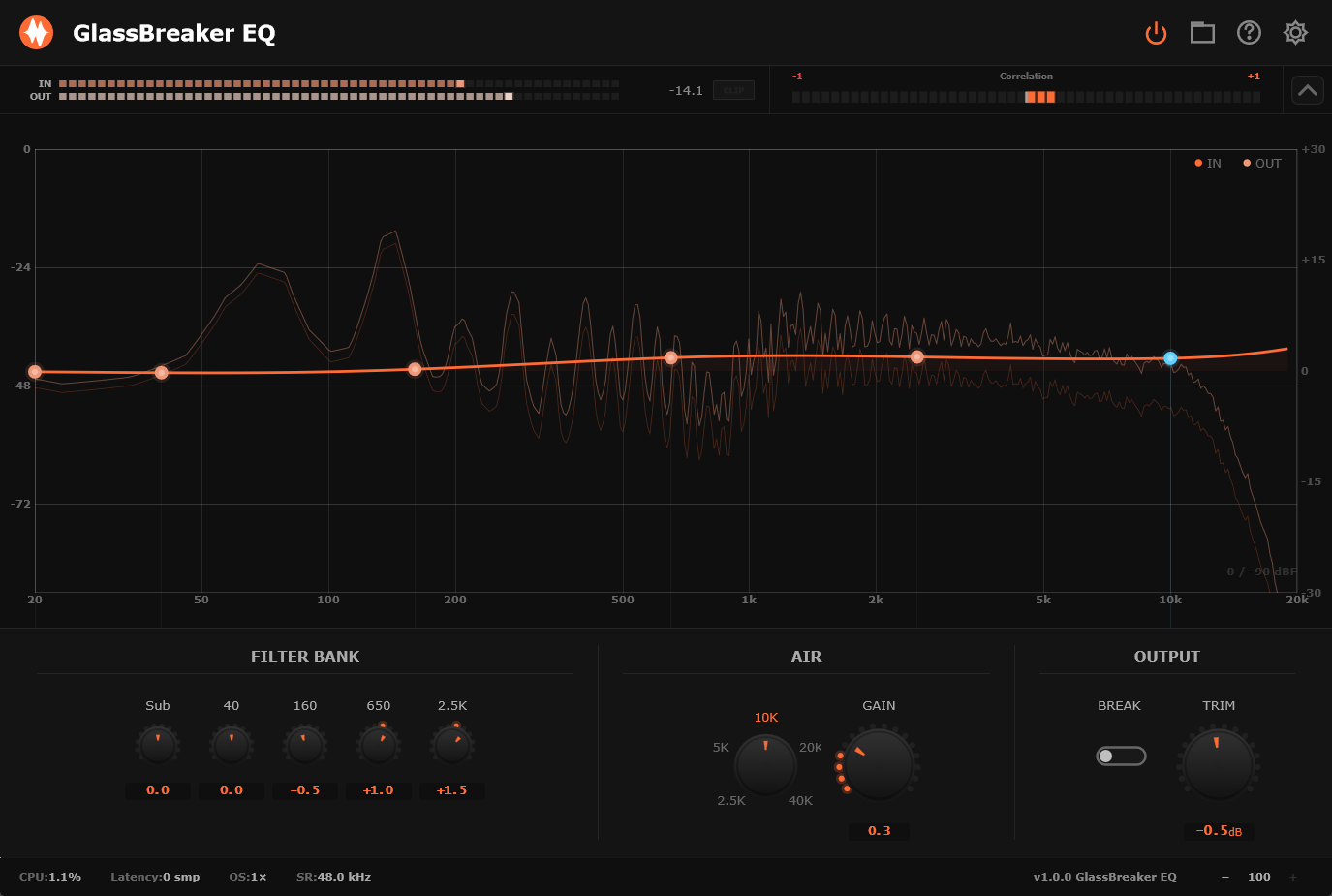
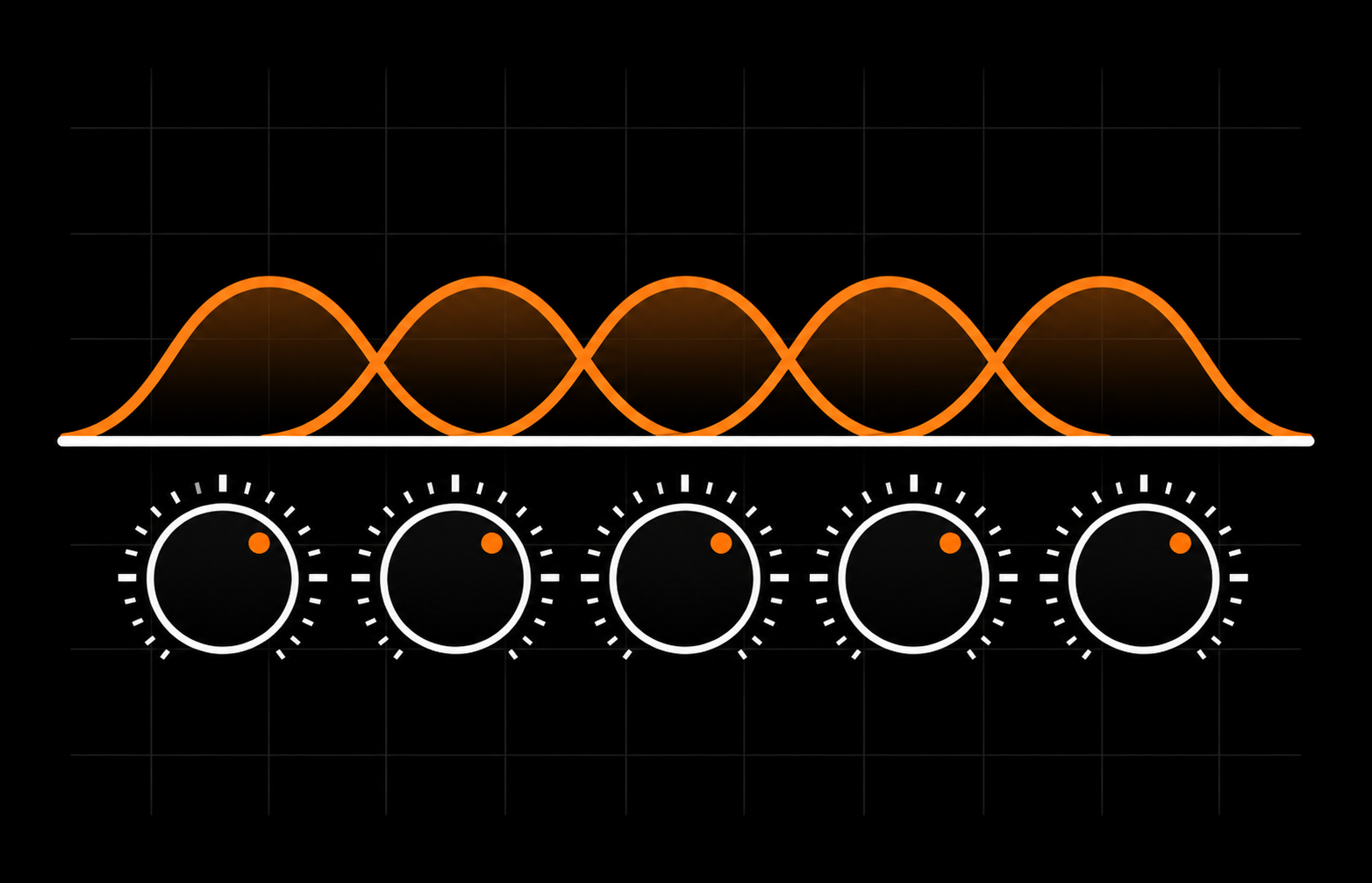
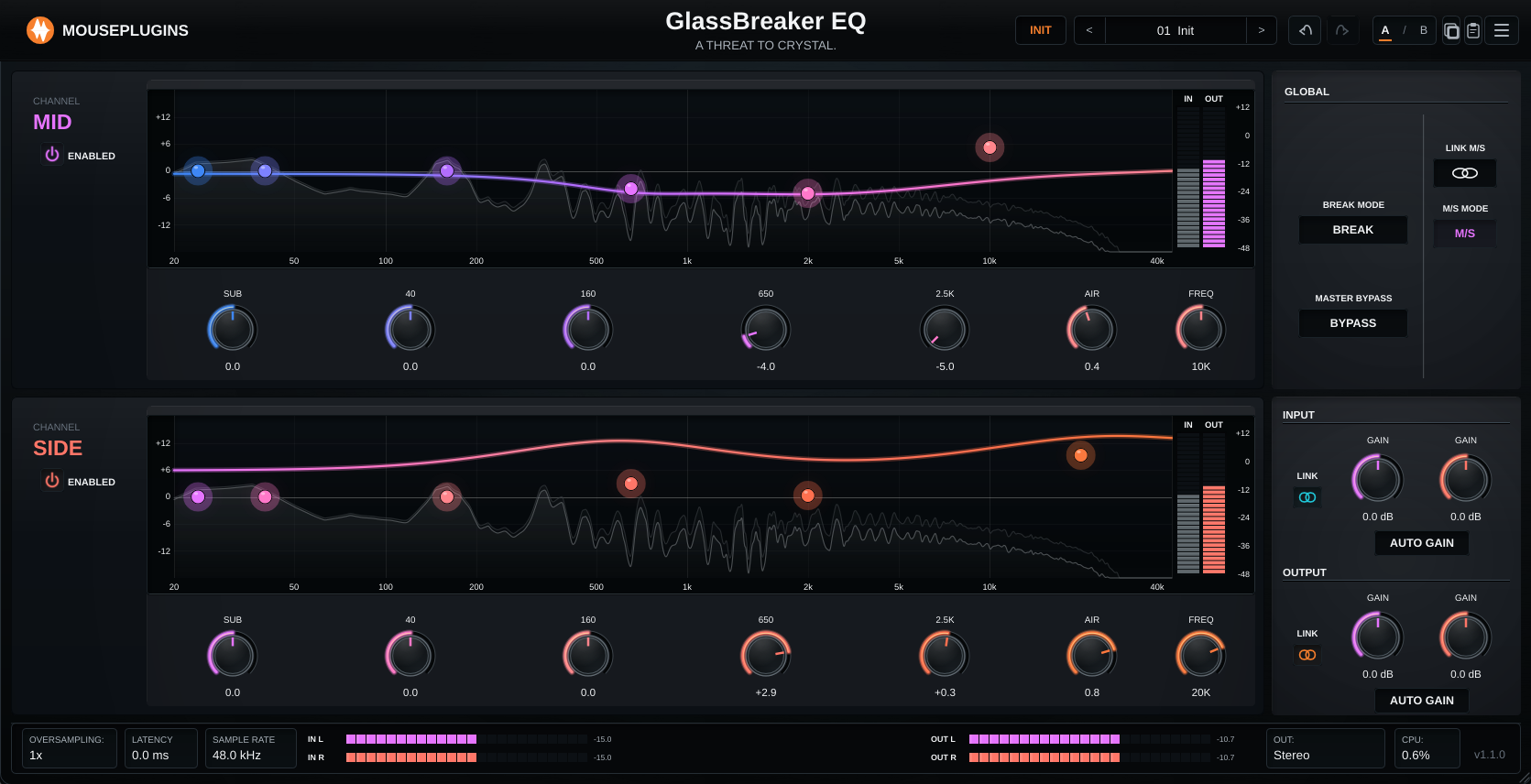
The result is five broad, overlapping, boost-leaning bands that interact as a complementary filter bank. Boost one band and its neighbours respond. Set all five to the same value and the overall response stays flat apart from level change: gain without intentional tonal shift. That constraint is built into the topology.
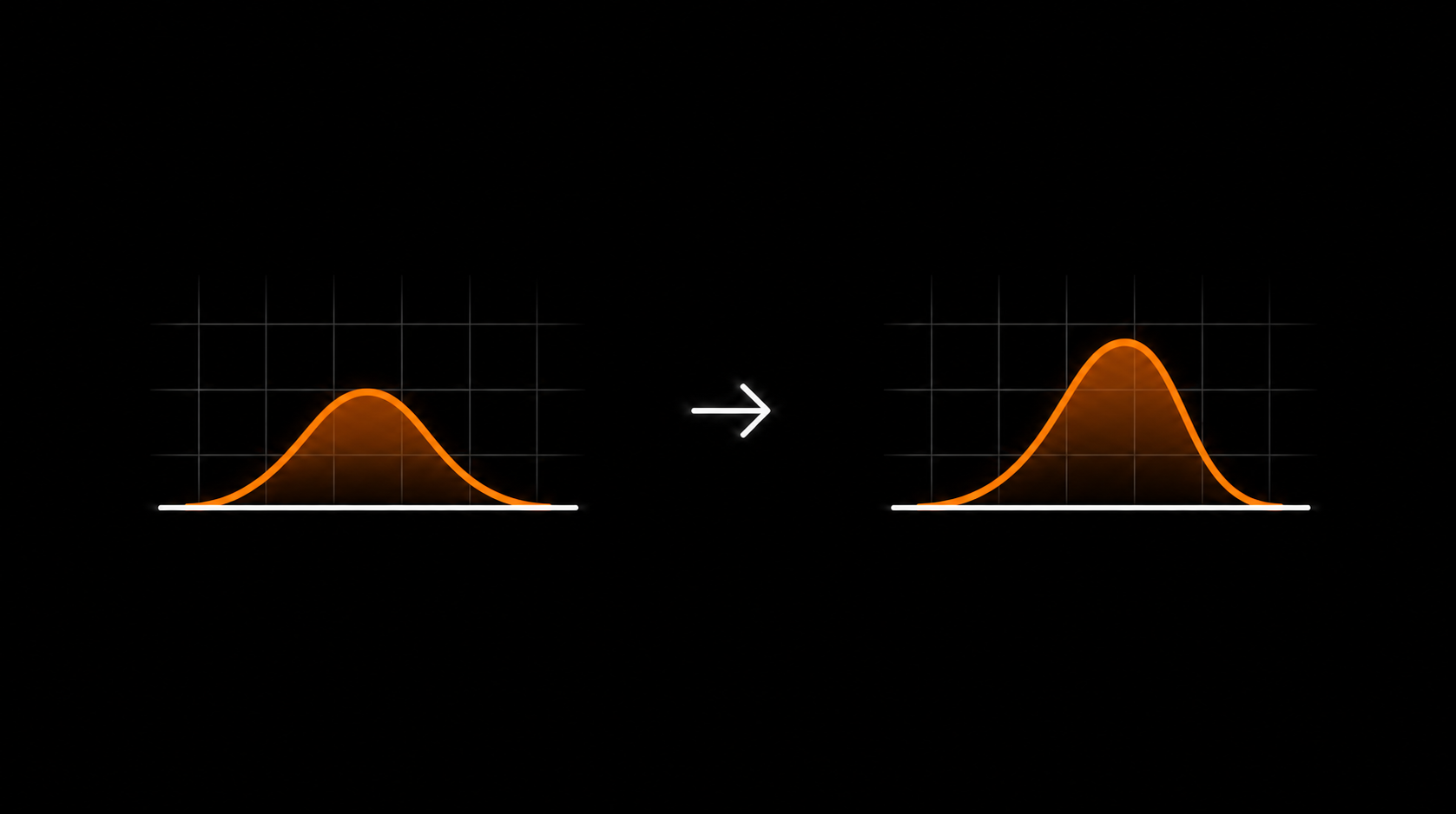
Each band boosts far more than it cuts: +15 to +19 dB at full boost, only −2 to −5 dB at full cut. That asymmetry comes from the measured calibration set: these are broad tone-shaping bands, not surgical notch filters.
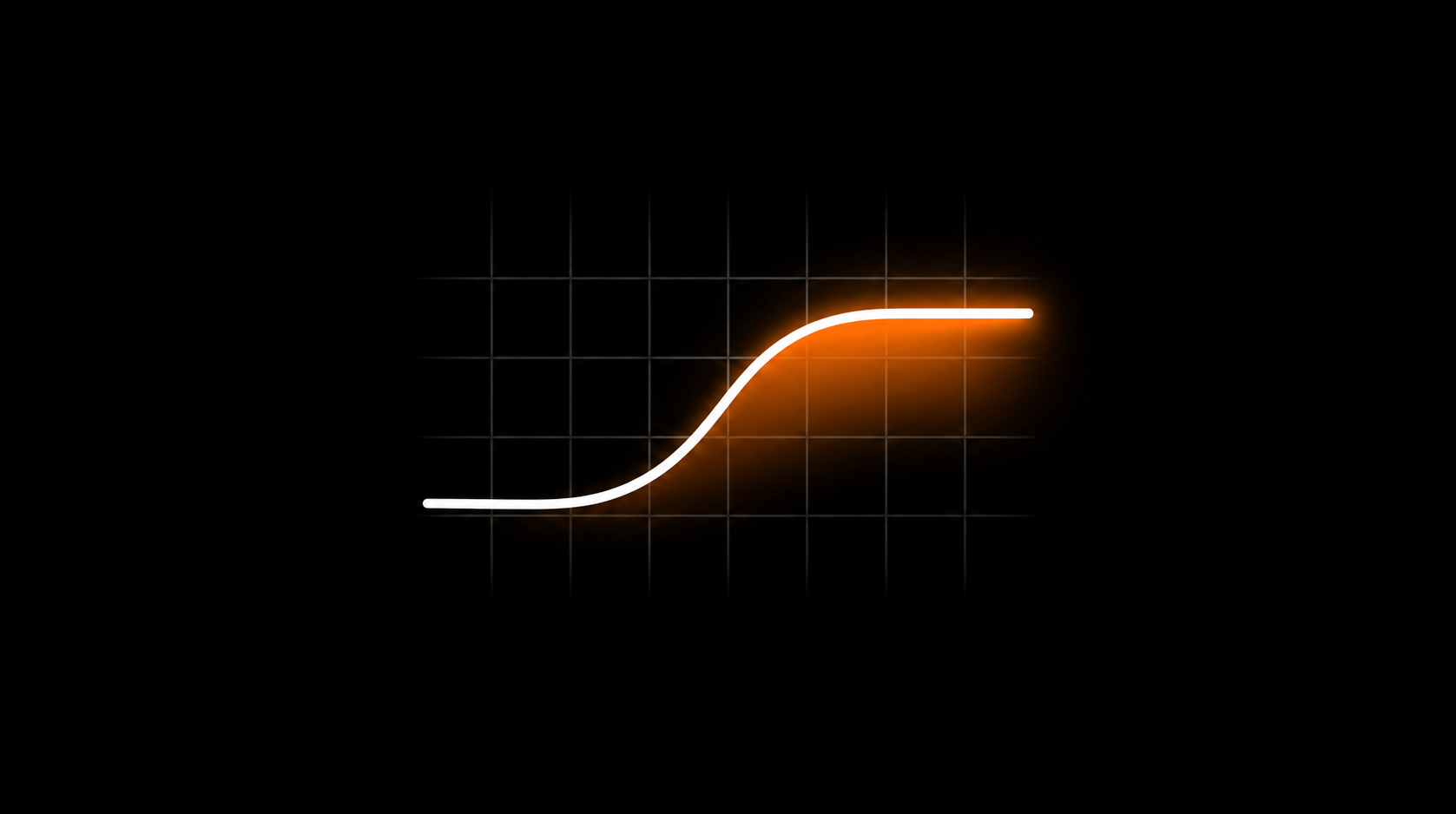
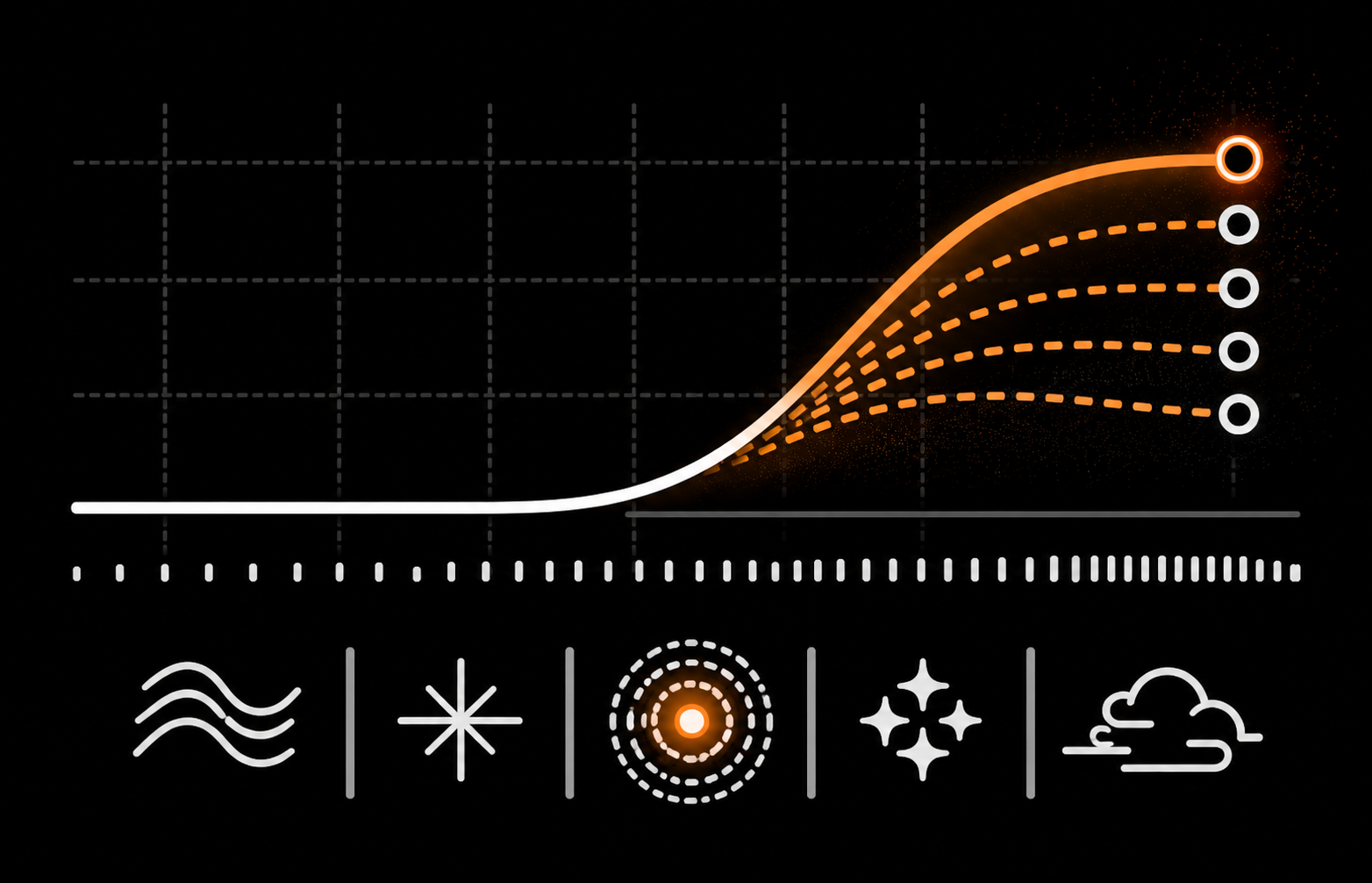
The Air section sits on top: a high-shelf boost at five selectable frequencies from 2.5 kHz to 40 kHz. At 10K it adds broad high-frequency "air" for vocals, acoustic instruments, and full mixes. At 2.5K it adds presence and forwardness. At 40K it reaches into ultra-high frequencies for sessions running at 88.2 kHz or higher.
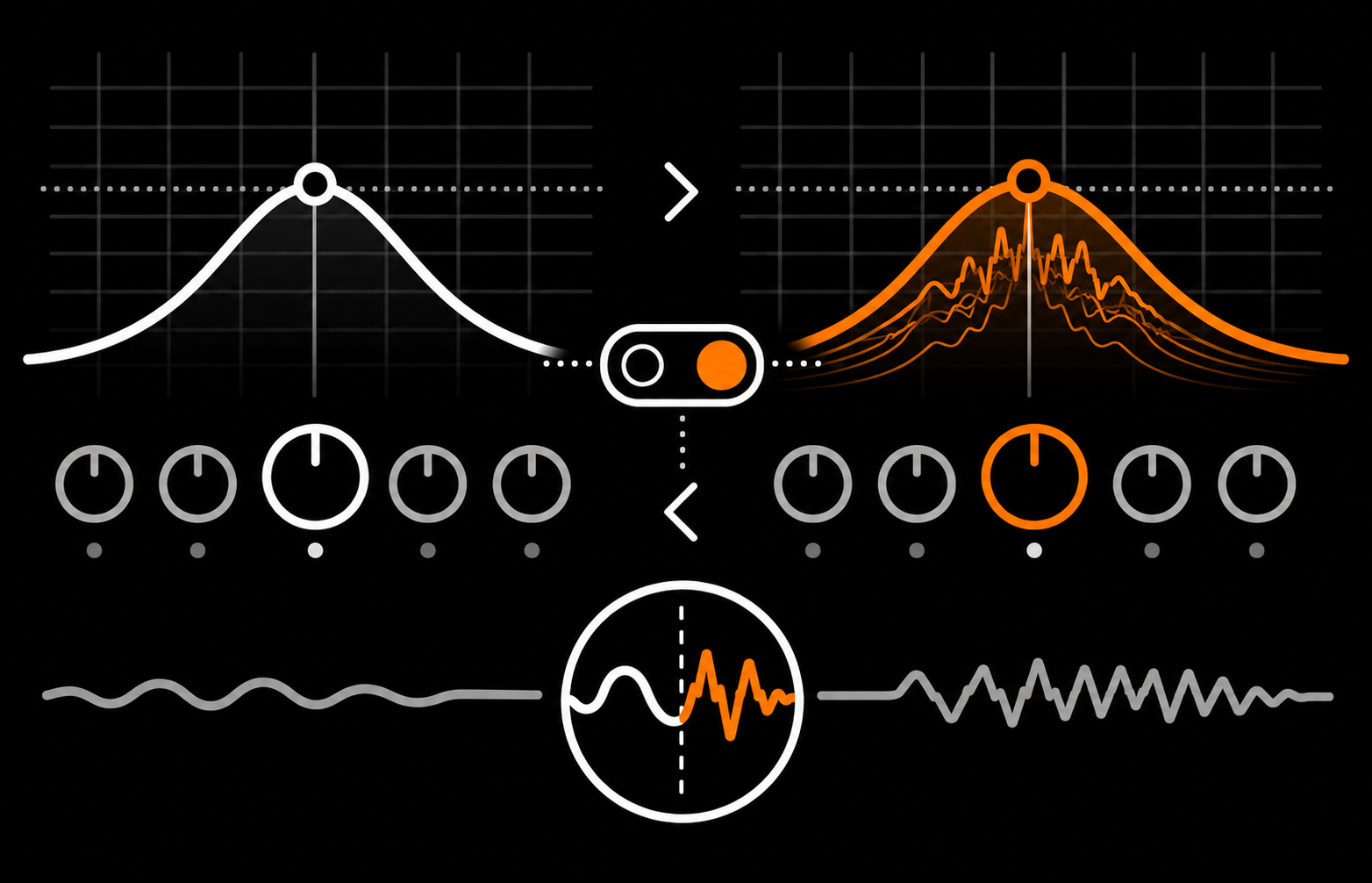
Break mode is an alternative voicing engine with its own colour and tilt character, switchable inline. Same five knobs, different response: thicker, more aggressive, and less linear. One toggle, no menu dive.
GlassBreaker EQ reports 0 samples of latency. It uses sample-by-sample IIR processing, with no FFT, no convolution, and no lookahead. Calibration is within ≤0.75 dB across the measured calibration states.
GlassBreaker EQ is offline-first. No internet connection required for activation or use. The plugin sends no telemetry, performs no phone-home checks, and does not require an online account inside the DAW.